August 1, 2018 Daniel Pink’s 1-Minute Exercise for Determining Your Company’s Purpose
If you had to describe the purpose of your business in one sentence, could you do it? That’s the challenge posed by Daniel Pink’s* brilliant one-minute exercise. He believes that a lot can be revealed by asking employees about the purpose of their organization.
To do this, pass out index cards and ask everyone to write about the organization’s purpose in one sentence. The results can be eye-opening.
I’ll let Pink explain more about the process.
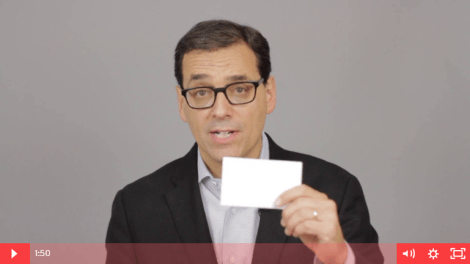
*Pink is the author of #1 New York Times bestsellers Drive and To Sell is Human. He publishes an informative business-related video every other week on The Pinkcast.
MARGARET SMITH IS A CAREER COACH, AUTHOR, INSIGHTS®DISCOVERY LICENSED PRACTITIONER, FOUNDER OF UXL, AND CO-FOUNDER OF THE TAG TEAM. SHE HOSTS WORKSHOPS FOR PEOPLE WHO NEED CAREER OR PERSONAL GUIDANCE. YOU CAN VISIT HER WEBSITE AT WWW.YOUEXCELNOW.COM


Tags: Better Business, business coach Margaret Smith, company purpose, daniel pink, daniel pink mission statement, determine company purpose, Margaret Smith Minneapolis career coach, mission statement activity, pinkcast mission statement activity
- Leave a comment
- Posted under Better Business, Organization
July 25, 2018 5 Ways Leadership is Like Camping

It’s the season of pitching tents and building campfires. Camping can be easy and enjoyable…or it can be downright miserable. In that sense, it has a lot in common with leadership! What else do they have in common?
Here are 5 ways leadership can be a lot like camping:
1. You can weather any storm with the right equipment
Just like a quality tent and sleeping bag will help you survive the driving rain or bitter cold, so too can well-developed leadership skills help you handle even the most difficult situations. Some of these skills you might learn through time, experience, and trial and error, and others you might acquire through classes, like the Build A Boss program.
This “equipment” can prepare you for dealing with tough conversations, coping with major organizational changes, or tactfully approaching staff reduction. Leadership isn’t always going to be sunny days and clear waters. You’ll have to rely on your skill set to see you through some difficult situations.
2. It’s unpredictable
Camping can be wonderful and relaxing—filled with swimming, fishing, and campfires—or it can be rainy, cold, buggy, and just plain miserable.
In the same way, leadership has its ups and downs. As a leader, you might have days or weeks that are productive and inspiring…and then you might find yourself in a downward spiral of awfulness. As a leader, you have to ride those waves and use your ingenuity, adaptability, and drive to create strategies to overcome them.
3. It’s fun…with the right attitude
Have you been on a camping trip with someone who insists on not having fun? That person might complain about the dirt, the bugs, the camp food, the campfire smoke, the cold water and on and on…but they completely miss the fresh air, sunshine, and freedom.
Leadership is all about perspective. Leaders tend to face a lot of tough situations and difficult people, BUT they also have amazing opportunities. As a leader, you are given a chance to head up amazing projects and teams of people, you’re entrusted with big responsibilities, and you have the opportunity to be the face (or at least somewhat the face) of the company. Focusing on the positive aspects of your leadership and striving to create constructive change will help you realize that leadership can be rewarding and even (gasp!) fun.
4. It’s energizing
Paddling a canoe, hiking, setting up camp—it’s all invigorating and can give you a burst of energy. Similarly, leadership can be just as motivating. Just ask someone who has rallied a team of twenty people to work together on a unified task. Or someone who has helped amp up their company’s profit margin. Or someone who has mentored an individual and helped him thrive. Good leaders find energy in actions such as these and also strive to motivate others.
5. It leaves you vulnerable
Just like camping leaves you vulnerable to the elements, so too does leadership leave you somewhat bare. You are thrown into the spotlight; all eyes are on you and your example. What are you going to do?
Situations like these are common, and you have to decide how you will handle them. In my experience, it is better to be candid, transparent, and authentic than closed off and secretive. If you are open and honest with your team (within reason!), they are more likely to be open and honest with you when they have an issue or would like to talk over a bold new idea. This kind of open communication creates a healthy, humming work environment. Have courage. Be willing to own up to mistakes, be genuinely you, communicate with authenticity, and be a tad vulnerable.
This summer, I hope you have sunny days, refreshing afternoons in the water, and zero bug bites…but if you do encounter these things, I hope you’ll face them with the proper gear, a little ingenuity, and a lot of positivity.
MARGARET SMITH IS A CAREER COACH, AUTHOR, INSIGHTS®DISCOVERY LICENSED PRACTITIONER, FOUNDER OF UXL, AND CO-FOUNDER OF THE TAG TEAM. SHE HOSTS WORKSHOPS FOR PEOPLE WHO NEED CAREER OR PERSONAL GUIDANCE. YOU CAN VISIT HER WEBSITE AT WWW.YOUEXCELNOW.COM
Tags: build a boss leadership program, energized leader, Inspiring leader, leadership and camping, leadership tips, margaret smith leadership, strong leadership, vulnerable leader
- Leave a comment
- Posted under Leadership
July 18, 2018 Why Should You Name Your Failures?

No one wants to focus on failure. This kind of thinking is not fun, it drags you down, and it reminds you of your imperfections. While that’s true (and it’s certainly not great to dwell on screw-ups), there is POWER in acknowledging your failures and calling them out by name.
What do I mean by that?
Instead of either A) ignoring a failure and pretending it didn’t happen OR B) letting yourself be consumed by the failure, reflect on it and write about it. This exercise could be utilized for any setback or misstep you experience, big or small.
ALSO, make sure you jot down a note about what you learned from your failure or a strategy to avoid that specific error in the future.
Here are a few examples:
Failure: Not preparing for the company meeting
Main Lesson: I need to set aside half an hour before future meetings to prepare for them.
Action Steps: I will set a notification in my e-calendar whenever I schedule a meeting to help me remember to prepare.
Failure: Missing too many of my daughter’s basketball games
Main Lesson: She won’t be young forever. I need to do a better job of balancing family life with work.
Action Steps: I will schedule her games into my calendar and set them as a top priority. If I can’t make a particular game, I will schedule one-on-one time with her during the subsequent week.
Failure: Sticking with an ill-suited job for too long
Main Lesson: I need to pay attention to my inner GPS and know when I’m experiencing discontentment with my work.
Action Steps: If I start to feel like my job isn’t working out, I will immediately take steps to figure out the best course of action, such as taking time for deep reflection or consulting a career coach.
Calling out your failures is powerful. According to Stanford researcher and author, Tina Seelig, keeping a kind of “failure résumé” helps you to compartmentalize your mistakes and avoid them in the future.
Your failure résumé should be a living document—add to it whenever you have learned a life lesson, whether significant or minor. Writing down something as simple as “Don’t send out an ‘emergency email’ to my supervisor on a Friday” or “Don’t offer Karen coffee—she doesn’t drink it,” can help you avoid the everyday, minor mistakes that we tend to make.
Isn’t it time to wrangle your mistakes and keep them somewhere, rather than tripping over them? I think so. Calling them out won’t make your future mistake-free, but it will help you avoid making the same mistake twice.
MARGARET SMITH IS A CAREER COACH, AUTHOR, INSIGHTS®DISCOVERY LICENSED PRACTITIONER, FOUNDER OF UXL, AND CO-FOUNDER OF THE TAG TEAM. SHE HOSTS WORKSHOPS FOR PEOPLE WHO NEED CAREER OR PERSONAL GUIDANCE. YOU CAN VISIT HER WEBSITE AT WWW.YOUEXCELNOW.COM
Tags: failure into action, failure isn't terrible, failure resume, margaret smith career coach, Margaret Smith life coach, overcome failure, overcome setbacks, thinking about failure differently, turn failure to success
- 1 comment
- Posted under Advice from a Life Coach, Changing Your Life


 UXL Blog