Category Archives: Tips for Improving Interactions
February 8, 2017 Hey you! Look up from your phone! (Improving modern communication)

Technology can be a wonderful thing. It helps us connect people from across the country (or world) through a video conference or virtual chat. It allows us to easily create charts and map out data. It allows us to better serve our customers.
But there is a dark side to technology. It’s the side that affects our everyday interactions with people—the side that completely sucks us in and tethers us to our devices.
Have you ever walked into a restaurant and noticed friends, couples, or even entire families absorbed in their smart phones? Or noticed people out for a walk, with their heads buried in their devices?
Are you guilty of this too? Do you catch yourself shooting your co-worker an email when you could just walk to her office and ask a quick question? Do you find yourself flipping through social media or the news or weather instead of engaging those around you in conversation?
Yes, technology does great things, but it’s also killing our communication skills. According to MIT sociologist Sherry Turkle, author of the book Reclaiming Conversation, our deep absorption in our devices has caused us to lose our ability to have deeper, more spontaneous conversations with others. We begin to lose our capacity for “empathy, introspection, creativity, and intimacy.”[1]
With Valentine’s Day fast approaching, I think about the implications this has for our relationships. Are our conversations lacking the depth they used to have? Are we missing opportunities to look others in the eye and truly connect with them?
Looking at it from another angle, are we missing opportunities at work because we’ve greatly reduced the number of face-to-face interactions we have with others? Sherry Turkle says YES. She points to many studies that indicate that when people are allowed to talk to each other, they do better—they’re more collaborative, they’re more creative, they get more done.
And what about networking? I’ve talked with many people who say that the younger generation has difficulty with face-to-face networking. It’s a skill that doesn’t come easily for them because so many of their interactions are digital. That’s troubling because, according to Hubspot, 85% of people say they build stronger, more meaningful business relationships during in-person business meetings and conferences.
Face-to-face still matters!
It’s time we stop multi-tasking, set our cell phones aside, and rediscover meaningful conversation with others. Our relationships—both personal and professional—will be better for it.
[1] Suttie, J. (December 7, 2015). How Smartphones Are Killing Conversation. The Greater Good Science Center at Berkeley. http://greatergood.berkeley.edu/article/item/how_smartphones_are_killing_conversation. Accessed 12/19/16.
MARGARET SMITH IS A CAREER COACH, AUTHOR, INSIGHTS®DISCOVERY LICENSED PRACTITIONER, FOUNDER OF UXL, AND CO-FOUNDER OF THE TAG TEAM. SHE HOSTS WORKSHOPS FOR PEOPLE WHO NEED CAREER OR PERSONAL GUIDANCE. YOU CAN VISIT HER WEBSITE AT WWW.YOUEXCELNOW.COM


Tags: better communication, business coach Margaret Smith, improve communication, improve interaction, improve networking skills, Margaret Smith life coach, networking and communication, Technology and communication, technology damaging communication
October 5, 2016 Let Your Voice Be Heard!

Do you ever feel like we live in a world where people simply don’t listen to each other? Do you sometimes feel ignored during conversations? Or that others completely miss what you said because they were concentrating on themselves?
Part of the fault may lie with the other person, but there ARE ways to get others to listen to what you have to say.
It starts with the CONTENT of what you’re saying. If you tend to gossip, complain, or exaggerate, it won’t take long before others will tune out. Make sure that what you’re saying is worth saying. Next time you feel like griping about the weather or gossiping about a coworker, stop! Shift your focus to something more worthwhile.
Julian Treasure, international speaker and founder of The Sound Agency, advises us to focus on the acronym HAIL when we are speaking. HAIL stands for Honesty, Authenticity, Integrity, and Love. When you say something, be yourself, mean what you say, and say it with good intentions.
Treasure also talks about the sound quality of an authoritative voice. For instance, people who have a deeper voice and speak from their chest tend to exude more authority than those with higher, lighter voice. He also recommends talking at a steady pace (rather than a too-quick pace), using a warm timbre, and emphasizing certain words to add interest to what you’re saying (rather than speaking in a monotone voice).
Next time you have an interview, practice speaking in front of a mirror. Relax your speaking pace, speak from your chest, and add emphasis. You may also want to warm up your vocal chords by doing a series of voice exercises. For a list of useful exercises, watch Julian Treasure’s TED Talk (he goes over vocal exercises at the end).
How would the world change if people actually took the time to speak and listen with intention and mindfulness?
MARGARET SMITH IS A CAREER COACH, AUTHOR, INSIGHTS®DISCOVERY LICENSED PRACTITIONER, FOUNDER OF UXL, AND CO-FOUNDER OF THE TAG TEAM. SHE HOSTS WORKSHOPS FOR PEOPLE WHO NEED CAREER OR PERSONAL GUIDANCE. YOU CAN VISIT HER WEBSITE AT WWW.YOUEXCELNOW.COM
Tags: be heard, HAIL speaking, let your voice be heard, margaret smith career coach, perfecting your speaking, speaking advice Julian Treasure, UXL blog
September 7, 2016 The 2-Minute POWER-boosting technique
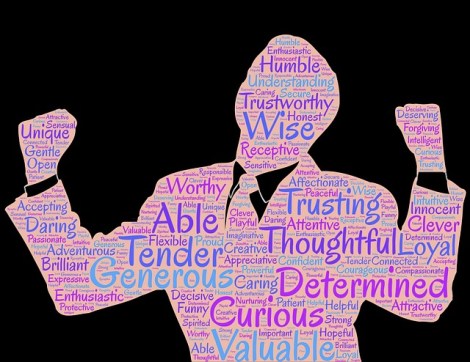
Social scientist Amy Cuddy studies nonverbal communication and how it relates to power. Through her research, she’s discovered some pretty incredible things about power dynamics, nonverbal signals, and how we can actually modify our mentality through physical actions.
Just like in the animal kingdom, humans puff up their chests and make themselves “big” if they perceive themselves to be in a position of power. On the flip side, people shrink down, hug their arms to their bodies, and lower their heads if they are feeling weak and vulnerable.
When we see someone posed in a “power position” or in a position of weakness, our brains automatically react. We are drawn to enthusiasm, confidence, and ease. From political candidates to doctors, we tend to gravitate toward displays of power.
But what if you don’t FEEL powerful? What if you doubt your abilities and lack self-confidence? Let your body language change your mind.
In Amy Cuddy’s studies, she has found that people who assume a power pose (opened chest, relaxed, arms wide) for as little as two minutes have higher levels of testosterone and lower levels of cortisol, which translates to more confidence and less stress. These people are able to cope with high-stress situations, such as a job interview, and are usually well-liked by others.
When you take on a power pose, something uncanny happens in the brain—it begins to believe that you are powerful.
When people question the authenticity of “faking it ‘til you make it,” Cuddy responds that she prefers the statement, “Fake it ‘til you become it.” The more frequently you tweak your nonverbals to indicate power and self-assurance, the more you’ll believe in that power. Eventually, you won’t have to fake it at all. You’ll elevate your confidence and approach situations with more comfort and poise than you used to.
Try assuming a power pose for two minutes the next time you are about to face a high-stress situation. It IS possible for your physical actions to change your brain!
To watch Amy Cuddy’s TED Talk, please click below:
MARGARET SMITH IS A CAREER COACH, AUTHOR, INSIGHTS®DISCOVERY LICENSED PRACTITIONER, FOUNDER OF UXL, AND CO-FOUNDER OF THE TAG TEAM. SHE HOSTS WORKSHOPS FOR PEOPLE WHO NEED CAREER OR PERSONAL GUIDANCE. YOU CAN VISIT HER WEBSITE AT WWW.YOUEXCELNOW.COM
Tags: 2 minute power boost, Amy Cuddy confidence, boost your confidence, career coach Margaret Smith, change your brain, confidence-boosting techniques, feel powerful


 UXL Blog