April 23, 2025 Help Others to Adapt (by Leveraging Your Strengths)

In my last post, I discussed the variety of ways in which people process and cope with change. While change might excite and energize some, others may feel discouraged or frightened by it. This, of course, can depend on what type of change we’re dealing with, and the circumstances around it. It also depends on a person’s personality and ways of processing change.
These concepts can all be tied to Insights® Discovery, a science-based program which helps people become better acquainted with themselves, their personal tendencies, how they react or adapt to certain situations, and more. (See my last post for more information on the program.) Suffice it to say, we all have different methods for dealing with change, and some of that is driven by our personal attributes and inclinations.
No one is flawless when it comes to fielding change. We all have areas of improvement, but we also have areas of strength. To help others cope with change, I’d like to challenge you to think about your personal strengths and how they can be an asset. Let’s discuss some of the strengths you might have:
You’re Research- or Data-Oriented
If you’re the type who likes to have the full, evidence-based picture before proceeding, you can play into this strength to help facilitate change. During times of uncertainty, research and data can assist us by painting a better picture of a situation (whether for better or worse!). And that, in turn, can help people understand how to move forward.
When leaning into this strength, keep in mind that not everyone sees the world as you do, so it’s a good idea to present the data in a way that is easily understood and digestible.
Note: these traits are associated with “blue energy” on the Insights® Discovery color wheel.
You’re a Go-Getter
For some, change is exciting and energizing. It feels like an opportunity to create a new, better reality. Even if a situation may seem negative on the surface, someone with a go-getter personality will want to move forward, experiment, and try out the new normal. While it is often a good idea for gregarious types to slow down, consider repercussions, and examine the data, it is also a good thing to have this type of movement-focused energy.
To help others, it’s prudent to channel some of this energy into concrete actions. Pinpoint a few reasons to get excited about the change and/or discuss a few ways of implementing the change as effortlessly as possible. Alternatively, if a certain change seems wholly terrible, a go-getter will develop strategies to refute or rework the change into something better. In short, let your enthusiasm be contagious and propel positive change.
Note: these traits are associated with “red energy” on the Insights® Discovery color wheel.
You’re Empathetic and Big-Hearted
Some people are defined by being caring and empathetic, often placing others’ wellbeing before their own. These compassionate souls can help either facilitate a change or soften its blow by considering how certain people (or groups of people) will react to or be affected by the change. Since the world (and workplace) is comprised of all types of people with different background and beliefs, it is tremendously valuable to be able to think beyond yourself and put yourself in others’ shoes.
This way of thinking can lead to adapting plans that work for a wide array of people, OR personalizing strategies to cater to certain groups. Perhaps certain aspects of a certain change will work for specific people, while other aspects should be rejected or reconsidered. Whatever the case, those with empathy are well-equipped to lead people-centered actions.
Note: these traits are associated with “green energy” on the Insights® Discovery color wheel.
You’re Creative
Some moments require creative minds and out-of-the-box thinkers to take the lead. These personality types can examine a difficult situation and start thinking of ways to rework it, move around it, or reject it. Creative solutions can help people dealing with a major change OR they can help to reinvent/rethink the change so it works better for more people.
If we pair creative types with those who prefer to lean on evidence and research, we can create a powerful team that, in theory, balances data with innovative solutions.
Note: these traits are associated with “yellow energy” on the Insights® Discovery color wheel.
No matter your personality, you have the capability to help others deal with change. Whether you’re opposed to or supportive of the change, you have the power to navigate it, using your unique strengths and personality traits. Start thinking about your personal attributes as your superpowers!
BONUS: Insights® Discovery provides a chart for the four major personality types (color energies) to manage change. I encourage you to take a look:
MARGARET SMITH IS A CAREER COACH, AUTHOR, INSIGHTS® DISCOVERY (AND DEEPER DISCOVERY) LICENSED PRACTITIONER, AND FOUNDER OF UXL. SHE HOSTS WORKSHOPS FOR PEOPLE WHO NEED CAREER OR PERSONAL GUIDANCE.
CHECK OUT MARGARET’S ONLINE LEADERSHIP COURSE.
Tags: Assist with Change Tap into Strengths, help others adapt, Helping Others with Change, Insights Discovery strengths, Leverage Your Strengths, Margaret Smith licensed Insights practitioner, Margaret Smith Minneapolis career coach, Personality Traits and Change
- Leave a comment
- Posted under Better Business, Insights Discovery, Teamwork
April 9, 2025 How Your Personality Type Adapts to Change

We are living through a time of major change. No matter your location, job industry (or job status), political leanings, or background, you have likely been affected by all the change that is underway. Maybe you (or someone you know) were part of the recent mass layoffs, maybe you’ve simply noticed the prices of certain items changing, or perhaps you’ve observed relationships changing due to recent political tension. Whatever the case, you have likely felt the ripple effect of change, whether subtle or severe.
Since we are all “built differently,” we deal with change in different ways. Our brains process information differently, and our bodies react in varying ways (a faster heartrate, clenching up, preparing to either fight or flee, etc.). One of the best ways to cope with change is to become familiar with your personal tendencies—the ways in which you typically react when confronted with change.
As a Licensed Practitioner of Insights® Discovery, I know how helpful it is to develop a deep understanding of yourself, your personality, your strengths and flaws, and the way you respond in certain situations. The Insights® Discovery program defines people by four distinct “color energies.” Each of the four colors is connected to a certain set of personality traits and tendencies. Because humans are multi-dimensional, we all have the capacity to embody all four colors, but we tend to embrace one or two more often that the others. The chart below shows some of the basic characteristics of each color energy. Which one(s) do you find yourself identifying with most?
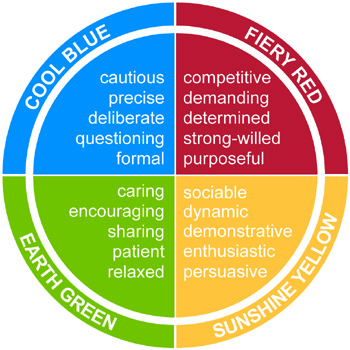
NOTE: This was a very basic introduction to Insights® Discovery. If you are interested in diving deeper, you can contact me or explore the topic on my website.
Insights® Discovery and Change
When you’ve developed an understanding of yourself, your personal attributes, and how you approach difficult situations, you can begin to understand how you’re predisposed to coping with change.
Someone who leads with blue energy may feel overwhelmed by a lack of information or clarity. They may think that things are accelerating too quickly, and it is necessary to pump the brakes and think critically before proceeding.
Someone who identifies with red energy may cope well with fast-moving change, but they may also get frustrated with a lack of clarity or end goals.
A person leading with green energy might automatically think about the implications the change will have on others. This could either energize them, or leave them feeling disheartened (depending on how the change impacts other people).
Those leading with yellow energy may start thinking creatively about where the change could lead, and how it could affect others. They may feel compelled to talk over the change with other people to make sense of it.
These potential reactions are generalizations, of course, but they give us an idea of how varied a person’s response can be to change. When facilitating the Insights® program, I have found that people respond to change with varying degrees of:
- Adaptability
- Eagerness or energy
- Resilience
- Creativity
- Compassion or empathy
- Skepticism
- Vision or big-picture thinking
Not only are we all very different, we can even take on different attitudes day-by-day, depending on our state of mind, the circumstances, the support of others, etc. In other words, we are dynamic and our reactions to change or difficult circumstances can change. And that’s okay! There is no single “right way” to react to change.
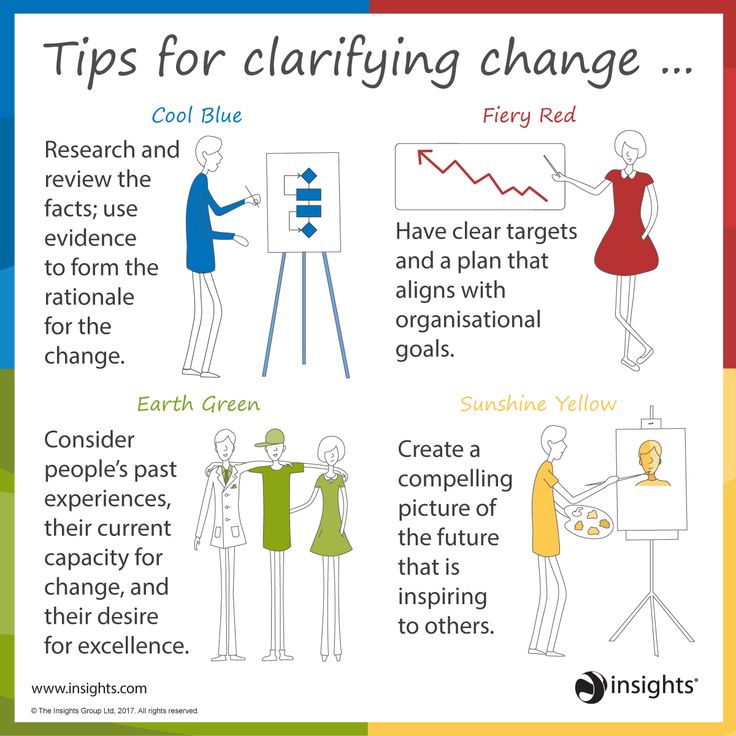
Lastly, please refer to the infographic from Insights® Discovery below. This image conveys how each color energy can make change work for them (through research, establishing clear goals, considering others, etc.). If you’re finding yourself having difficulties grappling with a certain change, consider using this chart as a guide.
MARGARET SMITH IS A CAREER COACH, AUTHOR, INSIGHTS® DISCOVERY (AND DEEPER DISCOVERY) LICENSED PRACTITIONER, AND FOUNDER OF UXL. SHE HOSTS WORKSHOPS FOR PEOPLE WHO NEED CAREER OR PERSONAL GUIDANCE.
CHECK OUT MARGARET’S ONLINE LEADERSHIP COURSE.
Tags: Adapting to Change and Personalities, Color Energies and Change, Insights Discovery adaptability, Insights Discovery change, Margaret Smith licensed Insights practitioner, Margaret Smith LP of Insights, Personality Type Adapts to Change
- Leave a comment
- Posted under Advice from a Life Coach, Insights Discovery, Transitions
March 19, 2025 5 Strategies for Being Heard

Do you sometimes feel like your voice isn’t being heard? Do others tend to dominate the conversation, putting forth their ideas and perspectives without giving you a turn to speak? Whether you’re dealing with interactions in your personal life or the workplace, it is incredibly frustrating to be silenced.
This silencing can happen for a variety of reasons. Maybe you’re naturally quiet or laid back. Perhaps the people dominating the conversation are especially loud or domineering (or, in some cases, even narcissistic). Or maybe the workplace culture or social norms dictate who normally speaks and is listened to. Whatever the case, it is possible to break through the barrier and be heard.
Keep in mind, your thoughts, opinions, points of view, and ideas are valuable. You bring fresh perspectives to the table, and your views are worthwhile. Not to mention, assertive people are the ones who normally get raises and promotions; they’re noticed, and people listen to them. You can be that person. Here are five suggestions to get started:
Enter with Confidence
You set the tone for a conversation as soon as you enter a room or log into a Zoom meeting. Your body language can exude confidence and savviness…or it can show timidness and insecurity. To develop the confidence you need, I suggest preparing as best you can for the meeting or conversation. Do your due diligence and learn whatever background information you need to be a confident contributor. You could even practice reciting a few sentences in the mirror (practicing out loud really does help).
Then, focus on your body language. Keep your shoulders up, head high, and a pleasantly confident expression on your face. Pay attention to what is being said, and understand when your input might be valuable.
Stop Interrupters
If someone interrupts you in the middle of a sentence, put a stop to it, if possible. Sometimes interruptions happen in the natural flow of conversation, but other times they are chronic and consistent and need to be stopped. To stop an interrupter, try holding up your hand and saying something to direct attention back to you. Some examples are:
“Wait. I know you want to jump in, but I wasn’t quite finished.”
“Great point. I’ll address that when I’m done speaking.”
“Hold on, please. I’m almost done making my point.”
Anticipate the Interruption
If interruptions are the norm in certain groups or settings, you can set yourself up for success by preemptively addressing that problem. When you start speaking, try opening with a sentence like, “I would like two uninterrupted minutes to make an additional point.” Or: “I know many of you are eager to share, but I would love to say one thing before anyone else gives their input.” Then, proceed.
By opening with such a statement you’re setting up a clear expectation. You will say your piece, and then others will have a turn.
Find an Advocate/Partner
If your efforts to be heard are not bearing fruit, it may be a good idea to confide in someone else who is regularly in the same meetings or conversations. Confide in this person privately and let them know your frustrations. It’s possible they have no clue that you’re feeling silenced or left out. Once they’re aware of the issue, ask if they would be willing to subtly include you in meetings. This could mean saying something like, “We haven’t heard from Catherine yet. I’m curious if she has any ideas.” Or: “Catherine, you seem to want to say something. What’s on your mind?” Or: “Hold up, Roger. I think Catherine was in the middle of saying something. Let’s hear her out before you take your turn.”
Talk to Your Interrupter
In some cases, depending on your relationship with the person or people who chronically interrupt you, it may be best to be direct. If you feel comfortable enough with someone to have an honest conversation, do so and let them know how you feel. You might say something like the following:
“I always appreciate your enthusiasm in meetings, but lately it feels like there’s no room for my voice. Do you suppose I could have the floor for a few minutes next time?”
“I didn’t get much of a chance to offer my perspective at yesterday’s meeting. At our next one, I would love just two or three minutes of uninterrupted floor time.”
“I had several thoughts during our last meeting, but I didn’t have a chance to express them. Could I kick off our next meeting with a few uninterrupted minutes of speaking time?
I suggest having this conversation in person, rather than over email or a messaging app, so you can talk civilly and not blow things out of proportion.
Don’t let those who are the loudest and most confident (or aggressive) always get air time. You, and your quieter colleagues and friends, have valuable things to say and contribute, and your voices deserve to be heard. With a few intentional strategies and actions, you should be able to amplify your voice and confidently deliver your message.
MARGARET SMITH IS A CAREER COACH, AUTHOR, INSIGHTS® DISCOVERY (AND DEEPER DISCOVERY) LICENSED PRACTITIONER, AND FOUNDER OF UXL. SHE HOSTS WORKSHOPS FOR PEOPLE WHO NEED CAREER OR PERSONAL GUIDANCE.
CHECK OUT MARGARET’S ONLINE LEADERSHIP COURSE.
Tags: amplify your voice at work, Be heard at work, listened to at work, margaret smith career coach, Margaret Smith LP of Insights, strategies for being heard
- Leave a comment
- Posted under Advice from a Life Coach, Communication, Thrive at Work


 UXL Blog