June 11, 2025 Taking Real (Not Performative) Actions

Have you ever felt like a person or business was putting on a show for their own gain? They may have made some kind of gesture or action that seemed helpful or kind on the surface, but when you looked a little closer, this act was really self-serving or ingenuine. Maybe it was a CEO apologizing (but not really apologizing) for some kind of misstep. Or maybe a business donated to a certain political party…and also donated to the competing party.
Gestures such as these would likely make you pause, do a double-take, and question the authenticity of the person, group, or business. That’s because there is a huge difference between genuine actions and performative ones. Genuine actions come from the heart. They are meaningful and substantial. And most importantly, they are done without the expectation of public acknowledgment or thanks.
On the other hand, performative or symbolic actions lack substance. Often, they are done publicly, to bolster the image of a person or business. The people or organizations that are supposedly benefitting from the performative action come second—they’re an afterthought. The most important thing is the boost the performer gets, whether that boost is related to image, finances, or ego.
Examples of Performative Actions
One type of performative action is supporting a marginalized group during a specific time of year (Black History Month, Women’s History Month, Hispanic Heritage Month, etc.) for the sole purpose of profiting off that group. Or, perhaps a company sends out a cheery office-wide email recognizing an important issue (Happy Mental Health Month! Here is a list of 10 ways to practice self-care…), but then fails to take any real action to improve that issue (therapy programs, mental health leave, grief counseling, etc.).
Performance could also happen on a smaller scale. The late Pope Francis used the season of Lent as an example, saying that although giving something up (such as meat or chocolate) could be noble, it is more meaningful to do good works or take genuine steps to help others. He suggested fifteen simple “acts of love” as an alternative. These included saying “hello” and “thank you” to others, reminding people how much you love them, celebrating others’ successes, and donating to those in need. These small actions might not get you much credit or external recognition, but that’s not the point. The point is to quietly and authentically make the world a better place.
Choosing Authenticity
How do you make sure you’re acting authentically and not putting on a performance? Or, on a larger scale, how can you make sure your business is acting with genuine motives?
A great test is to think about your purpose or intentions (or the intentions of the business). Are you genuinely concerned about a cause and want to help? Or are you more concerned with how your actions are being perceived? Are you okay with receiving zero recognition for your actions? Or are you hoping for praise and accolades? These questions might warrant some contemplation—time to really sit and honestly consider your intentions.
Keep in mind: People can often see through a performance. If you act genuinely and have the right intentions, that will take you a long way in all aspects of life. It’s all about intention and carrying out that intention in a forthright way.
MARGARET SMITH IS A CAREER COACH, AUTHOR, INSIGHTS® DISCOVERY (AND DEEPER DISCOVERY) LICENSED PRACTITIONER, AND FOUNDER OF UXL. SHE HOSTS WORKSHOPS FOR PEOPLE WHO NEED CAREER OR PERSONAL GUIDANCE.
CHECK OUT MARGARET’S ONLINE LEADERSHIP COURSE.
Tags: act genuinely, acting with authenticity, eschew performative actions, margaret smith career coach, Margaret Smith life coach, real not performative actions
- Leave a comment
- Posted under Advice from a Life Coach, Better Business, Communication
May 21, 2025 Building Community
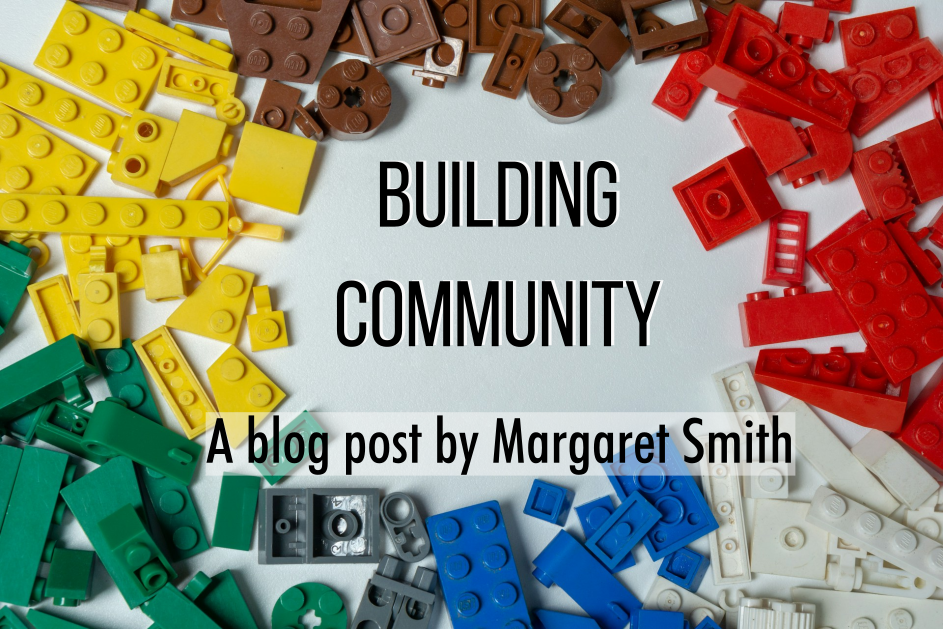
Practically speaking, we’re more connected than ever. With email, video chats, messaging apps, social media, and more, we’re just a click away from communicating with just about anyone. Why, then, is there so much talk about a nation-wide loneliness epidemic? Why are so many families out of touch with each other? Why are more and more people (from teens to the elderly) feeling isolated? And why do so many people not know their neighbors?
If technology built community, we would be a thriving network of individuals. Instead, many of us sit inside, scrolling through social media and “liking” others’ posts, without making any true connections. It seems we would rather have a million surface-level contacts than sit down with someone and have a conversation. This stark reality is unfortunate, because community is vital, and we need it more than ever.
How to Create Community
There is not, of course, a catch-all answer when it comes to building community. This is something that takes time and looks different in different circumstances. A person’s work community will look different from their community of family and friends, which will look different from their faith, volunteer, or special interest community. We may be more casual or more formal in certain communities. Or, we might feel like some topics are taboo in certain circles. Despite how different our communities can be, I do think some approaches to building community are universal. These include:
Be Genuine
We’ve probably all encountered people who strike us disingenuous or even “fake.” These types of people might be prone to exaggeration, or they might completely change their demeanor when they’re around certain people. While it’s fine to moderate your behavior around certain groups, there’s a big difference between editing your speech and becoming a completely different person. There’s also a difference between being a little more casual/formal in some situations and completely compromising your values. A genuine person will remain steadfast to their values and who they are, at their core.
Reach Out
Building community takes active work and participation. Extend invitations to others, be inclusive, and keep at. Sometimes it takes time for people to warm to you and feel as if they are part of your community. At the same time, if you sense that someone is truly not interested, there are other fish in the sea! Find those who seem interested in a reciprocal relationship—those who are willing to contribute and be a part of something.
Engage
In my book, The Ten-Minute Leadership Challenge, I devote an entire chapter to Building Community (focused on the workplace). Though this book was published a decade ago and parts of it are outdated (nothing about working remotely, for instance!), much of it is still relevant. In the community chapter, I discuss forming an authentic, respectful relationship with others by asking good questions and truly listening to the responses. The book puts forth a challenge related to this on page 119: “Test your listening skills. Challenge yourself to remember three important details from every conversation you have this week. Jot down those details immediately and then try to recall them two or three hours later. Can you do it?”
The purpose of this exercise is to 1) test your listening skills (are you truly paying attention?) and 2) help you learn something new about those around you. Healthy communities involve respectful and reciprocal relationships. It’s important to learn about each other, so we know how best to support and interact with one another.
If you’re feeling the isolation of our modern, social-media-dominated world, I suggest having the courage to put yourself out there, extend invitations to others, and start engaging in meaningful conversations. These are great first steps, but keep in mind: building community takes time and effort. If you genuinely care about your fellow community members, you will periodically check in with them and offer them support. And, if you surround yourself with caring and authentic individuals, they will do the same for you.
MARGARET SMITH IS A CAREER COACH, AUTHOR, INSIGHTS® DISCOVERY (AND DEEPER DISCOVERY) LICENSED PRACTITIONER, AND FOUNDER OF UXL. SHE HOSTS WORKSHOPS FOR PEOPLE WHO NEED CAREER OR PERSONAL GUIDANCE.
CHECK OUT MARGARET’S ONLINE LEADERSHIP COURSE.
Tags: Building Community, combat loneliness and build community, how to foster community, Margaret Smith life coach, Margaret Smith professional speaker
May 7, 2025 Your Actions Matter (even if you don’t realize it)

“I alone cannot change the world, but I can cast a stone across the waters to create many ripples.”
– Mother Teresa
In these tumultuous times, when everything seems to be changing at lightning speed, it is easy to feel like a very small fish in a very big pond. Politics, technology, the economy—it all seems so chaotic and beyond our control. Additionally, when we turn on the news or log onto social media, we’re often blasted with the latest problems and scandals of the day, which can send us down a rabbit hole of bad news and hot takes.
With so much going on—so many changes and so much chaos—it is easy to become discouraged, overwhelmed, or even depressed. What can one person do against such large forces? How can one voice or one action possibly make a difference? Take heart! It’s possible your actions matter more than you think.
The Ripple Effect
When you throw a rock into a pond, it sends out ripples that change the surface of the water. This is a common metaphor that illustrates how one small action can make a world of difference. Every decision you’ve ever made has had some kind of effect, whether the decision was small (choosing to drive a certain route, deciding to say hi to a grocery clerk, etc.) or large (deciding if (and where) to go to college, choosing who to marry, etc.).
These choices can impact you, those around you, and even people you’ve never met. For example, if you choose to be kind to a grocery clerk, that person might brighten up a bit and say something nice to another customer, who, in turn, might leave a generous tip at dinner that evening, potentially helping out a server who needs a little extra money to care for her sick child. That chain of events might sound far-fetched, but things like this happen every day. Our actions ripple out in ways we will never fully know.
In other words, your decisions matter! Because of that, I encourage you to stop feeling small and start taking intentional actions, knowing that they can (and do) make a difference.
Focus on Small Actions
Although most of us are not equipped to singlehandedly influence large systems or the “powers that be,” we can make an impact through small, meaningful actions. Your actions might be directed toward any of the following:
- Community (getting to know your neighbors better, helping someone with their yardwork)
- Family (taking time to be present, scheduling a family trip)
- Workplace (setting clear boundaries, asking for help when you need it, standing up for a co-worker)
- Politics (attending a protest, making a phone call)
- The Environment (picking up trash, planting a bee-friendly garden)
- …the list goes on!
Your everyday actions matter. Even if you cannot see their full impact, just know that every decision you make (no matter how small) can potentially create a positive or negative influence. Because of that, it’s a good idea to move mindfully through the world, choosing to act with kindness, patience, and understanding. It does make a difference.
MARGARET SMITH IS A CAREER COACH, AUTHOR, INSIGHTS® DISCOVERY (AND DEEPER DISCOVERY) LICENSED PRACTITIONER, AND FOUNDER OF UXL. SHE HOSTS WORKSHOPS FOR PEOPLE WHO NEED CAREER OR PERSONAL GUIDANCE.
CHECK OUT MARGARET’S ONLINE LEADERSHIP COURSE.
Tags: everyday actions matter, everyday interactions, Margaret Smith life coach, Margaret Smith Minneapolis career coach, ripple effect, your actions matter
- Leave a comment
- Posted under Advice from a Life Coach, Changing Your Life


 UXL Blog