Tag Archives: Margaret Smith professional speaker
November 19, 2025 Surrounding Yourself with Kindness

You have a choice, and it’s one of the most important choices you can make: You can choose who to surround yourself with. This week, let’s talk about why the people around you matter and how to weed out toxicity (and choose kindness) in your life.
Why “Your People” Matter
Have you ever dropped food coloring into clear water? Even a few drops can taint an entire pitcher, changing it from clear to bright green, or red, or blue. And if you give it a stir, the color will take hold even quicker, disguising the clear water entirely.
This is how toxic relationships can leak into our lives. Even a single toxic individual (like a single drop of food coloring) can ruin our day, dim our joy, or make us not want to show up for work. And two or three individuals can ruin things even quicker. Even if you have a sunny personality and are able to block out some toxicity (deflecting it like a piece of cheese cloth might ward off the drops of food coloring), that toxicity has a way of eventually soaking through.
In short, who we surround ourselves with matters. If the people you see on a regular basis tend to criticize and naysay, you’ll likely find yourself drained and depleted at the end of the day. On the other hand, if you’re surrounded by people who cheer you on, believe in you, and regularly uplift you, you’ll likely feel more energized, fortified, and affirmed.
Therapist John Kim wrote in a Psychology Today article, “…ask yourself who around you is draining you, sucking your energy and taking you hostage, making you feel insecure and less than, not supporting you and your story. What relationships in your life are lopsided? But more importantly, what you are going to do about it?”
What to Do About It
It can be difficult to know how to deal with a person (or people) who are, frankly, jerks. You might not be able to avoid a particular co-worker, for instance, or you might have to occasionally deal with a toxic friend or family member. However, there are a few proactive steps you can take:
Set Boundaries
If a friend is constantly dimming your light, you can choose to limit the time you spend with that person. If a co-worker is always naysaying ideas, you can push back with positivity (“Okay, we’ve heard from Susan what won’t work for this project. Who has an idea about what could work?”). Or, you might try to limit your interactions with them (scheduling fewer meetings, opting to only answer their emails once per day, etc.).
Surround Yourself with Kindness
Though we can’t always pick who we interact with, we can at times. You have the power to choose friends who uplift you and cheer you on. You can spend your time in committees and social groups that are positive and affirming, rather than ones that gossip and/or tear others down. You can also choose (in some cases) to focus your time on co-workers and family members who you enjoy being around. Remember: you are not obligated to upkeep friendships or acquaintances, just because you have known the other person for a long time. Sometimes, it’s okay to prune certain relationships from your life.
Talk Things Over
In certain cases, such as with close friends, family, or co-workers you see regularly, you may want to engage in a conversation about how they show up. John Kim suggests to “come from a place of care and concern, then tell them how their actions and energy are impacting you and the relationship.” Accusations and insults will lead nowhere, but constructive feedback could. It could be that the other person is unaware of how their words or actions are affecting you. Or maybe they are going through a rough patch and inadvertently taking out their frustrations on the people around them. A gentle and tactful conversation might illuminate those things for them.
Don’t let your well become tainted with toxicity! Understand how impactful the people around you can be and take the appropriate steps to protect yourself and infuse your life with positivity. You probably have more power over who you allow into your life than you realize.
MARGARET SMITH IS A CAREER COACH, AUTHOR, INSIGHTS® DISCOVERY (AND DEEPER DISCOVERY) LICENSED PRACTITIONER, AND FOUNDER OF UXL. SHE HOSTS WORKSHOPS FOR PEOPLE WHO NEED CAREER OR PERSONAL GUIDANCE.
Tags: Margaret Smith life coach, Margaret Smith professional speaker, positive people in life, positive presence, setting boundaries, surround yourself with kindness
July 23, 2025 What is Collective Grief? (and how could it be affecting you)
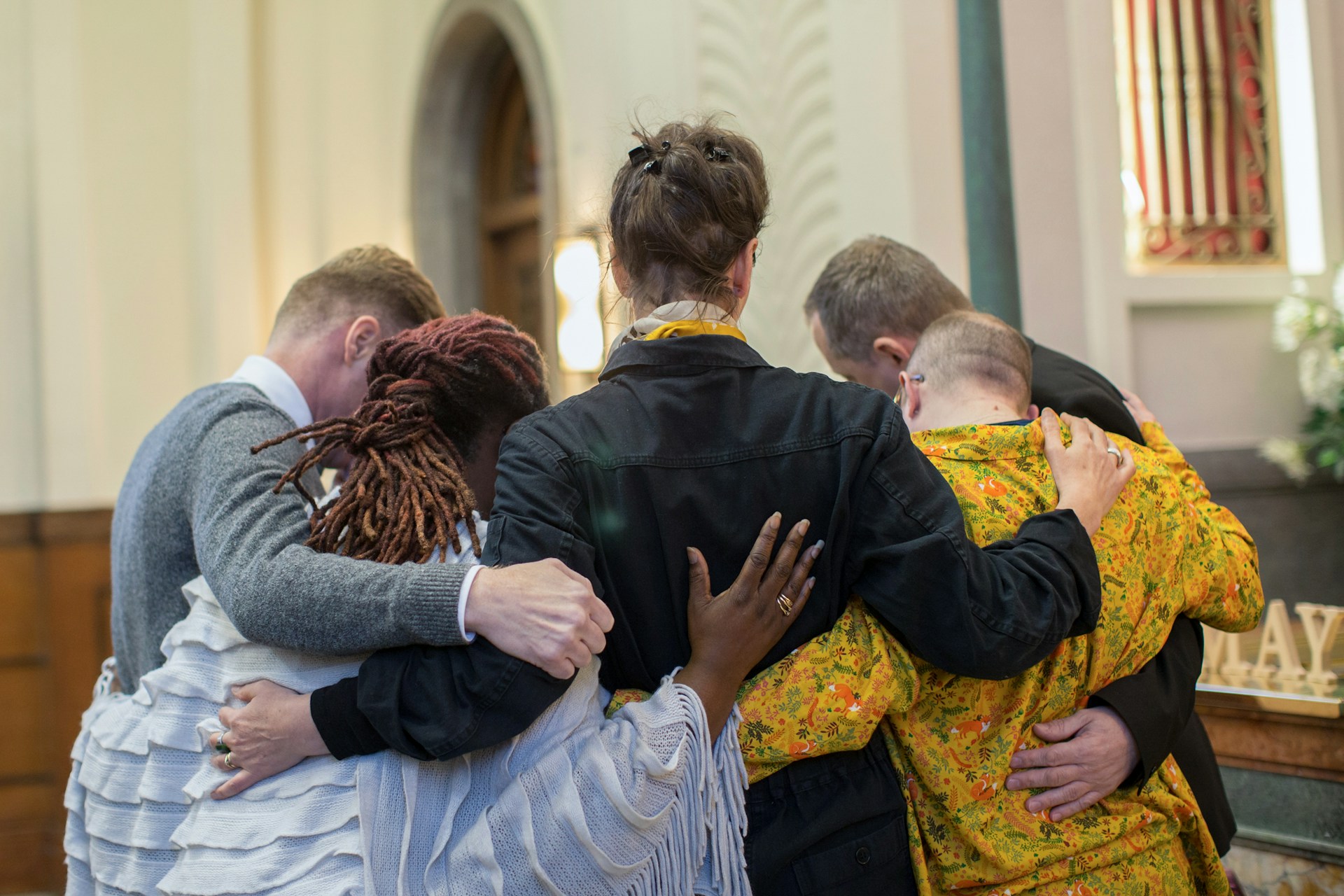
Grief is a complex emotion. Although it is often associated with bereavement and death, it can crop up in several other ways. You can grieve a former job, a house or city where you used to live, or a former lifestyle you once had. The common thread is loss. To make matters more complicated, grief can be a collective experience.
What is Collective Grief?
Collective grief is a term used to describe the sentiment of loss as experienced by a group of people. The group can be quite large (i.e. an entire nation) or smaller (a family or community group). Collective grief is often associated with a major tragedy or difficulty—a natural disaster, war, financial turmoil, a pandemic, etc. This type of upheaval can result in a sense of loss, or the feeling that things will never be the same.
If you are an empathetic person, you do not necessarily have to experience a certain tragedy or its side effects firsthand to go through grief or loss. For example, you might mourn the loss of a city that was decimated by an earthquake, or you may grieve for the families of those who have been jailed or deported. This type of grief isn’t any less valid. It just means you’re human, and you care for your fellow human beings.
Collective grief can be powerful and long-lasting. Furthermore, it’s possible to experience this type of grief without even realizing it.
How Collective Grief Can Show Up in Your Life
When you’ve been affected by an event or a change, your behavior or outlook may be altered, whether subtly or overt. Here are five ways you might manifest collective grief in everyday life:
- Difficulty Concentrating
When you’re enduring grief, you may find your attention wandering or have difficulty focusing on tasks. This can be exacerbated during times of collective grief, as the weight of the situation can feel overwhelming.
- Increased Irritability
Grief can make you feel on edge, causing you to snap at loved ones or co-workers more easily. This short temper may be a way of coping with the underlying emotional turmoil. The important thing is to recognize when you’re behaving irrationally, so you can make a concerted effort to amend this behavior.
- Changes in Sleep or Appetite
You may find yourself sleeping more or less than usual, or experiencing a loss of appetite. These physiological changes are the body’s way of dealing with the stress of grief. Again, awareness is key. If you’re noticing changes in sleep or appetite, it’s a good idea to address these issues head on (possibly with the guidance and support of a professional).
- Decreased Productivity
During periods of collective grief, you may find it harder to complete tasks or maintain your usual level of productivity. This can stem from the emotional and mental drain that comes with processing widespread loss or upheaval. It’s important to be patient with yourself during these times.
- Feeling Hopeless or Downtrodden
When experiencing collective grief, you may find yourself feeling defeated or hopeless, as the magnitude of the situation can feel overwhelming. This sense of despair can make it difficult to see a path forward. It’s important to remember that these feelings are a natural response to loss and change, and that with time and self-compassion, they will eventually subside.
The experience of collective grief can be isolating, as the loss or upheaval may be felt by a large group, yet each person’s individual response can vary. It’s important to recognize that these feelings are a natural reaction and to seek support from others who may be going through a similar process. By acknowledging the collective nature of the grief, individuals can find solace in the shared experience and work towards healing together. Reaching out to a mental health professional or joining a support group can provide valuable tools for navigating the complexities of collective grief.
Tags: Collective grief and its effects, margaret smith career coach, Margaret Smith professional speaker, overcoming collective grief, recognizing affect of collective grief, what is collective grief
- Leave a comment
- Posted under Advice from a Life Coach, Communication, Discussions
May 21, 2025 Building Community
Practically speaking, we’re more connected than ever. With email, video chats, messaging apps, social media, and more, we’re just a click away from communicating with just about anyone. Why, then, is there so much talk about a nation-wide loneliness epidemic? Why are so many families out of touch with each other? Why are more and more people (from teens to the elderly) feeling isolated? And why do so many people not know their neighbors?
If technology built community, we would be a thriving network of individuals. Instead, many of us sit inside, scrolling through social media and “liking” others’ posts, without making any true connections. It seems we would rather have a million surface-level contacts than sit down with someone and have a conversation. This stark reality is unfortunate, because community is vital, and we need it more than ever.
How to Create Community
There is not, of course, a catch-all answer when it comes to building community. This is something that takes time and looks different in different circumstances. A person’s work community will look different from their community of family and friends, which will look different from their faith, volunteer, or special interest community. We may be more casual or more formal in certain communities. Or, we might feel like some topics are taboo in certain circles. Despite how different our communities can be, I do think some approaches to building community are universal. These include:
Be Genuine
We’ve probably all encountered people who strike us disingenuous or even “fake.” These types of people might be prone to exaggeration, or they might completely change their demeanor when they’re around certain people. While it’s fine to moderate your behavior around certain groups, there’s a big difference between editing your speech and becoming a completely different person. There’s also a difference between being a little more casual/formal in some situations and completely compromising your values. A genuine person will remain steadfast to their values and who they are, at their core.
Reach Out
Building community takes active work and participation. Extend invitations to others, be inclusive, and keep at. Sometimes it takes time for people to warm to you and feel as if they are part of your community. At the same time, if you sense that someone is truly not interested, there are other fish in the sea! Find those who seem interested in a reciprocal relationship—those who are willing to contribute and be a part of something.
Engage
In my book, The Ten-Minute Leadership Challenge, I devote an entire chapter to Building Community (focused on the workplace). Though this book was published a decade ago and parts of it are outdated (nothing about working remotely, for instance!), much of it is still relevant. In the community chapter, I discuss forming an authentic, respectful relationship with others by asking good questions and truly listening to the responses. The book puts forth a challenge related to this on page 119: “Test your listening skills. Challenge yourself to remember three important details from every conversation you have this week. Jot down those details immediately and then try to recall them two or three hours later. Can you do it?”
The purpose of this exercise is to 1) test your listening skills (are you truly paying attention?) and 2) help you learn something new about those around you. Healthy communities involve respectful and reciprocal relationships. It’s important to learn about each other, so we know how best to support and interact with one another.
If you’re feeling the isolation of our modern, social-media-dominated world, I suggest having the courage to put yourself out there, extend invitations to others, and start engaging in meaningful conversations. These are great first steps, but keep in mind: building community takes time and effort. If you genuinely care about your fellow community members, you will periodically check in with them and offer them support. And, if you surround yourself with caring and authentic individuals, they will do the same for you.
MARGARET SMITH IS A CAREER COACH, AUTHOR, INSIGHTS® DISCOVERY (AND DEEPER DISCOVERY) LICENSED PRACTITIONER, AND FOUNDER OF UXL. SHE HOSTS WORKSHOPS FOR PEOPLE WHO NEED CAREER OR PERSONAL GUIDANCE.
CHECK OUT MARGARET’S ONLINE LEADERSHIP COURSE.
Tags: Building Community, combat loneliness and build community, how to foster community, Margaret Smith life coach, Margaret Smith professional speaker


 UXL Blog