Tag Archives: margaret smith leadership
May 8, 2024 6 Characteristics of a Problem Solver

A version of this blog post was published in July, 2019.
At times, problems will take care of themselves…but we certainly can’t count on that. In order to move the needle, put out “fires,” or add a little innovation to the workplace, it’s important to take charge of your destiny and be a problem solver.
Being a problem solver can be highly rewarding. Rather than either A) Sitting around and waiting for things to resolve themselves or B) Counting on others to solve your problems, it’s better to take a proactive approach. For one, the problems you’re facing may not resolve on their own. Or, they may not resolve themselves in the way you want. If you take “approach B” and let others solve problems for you, you lose crucial opportunities to learn and grow. Not to mention, your fate (or the fate of a project) will always be in others’ hands, beyond your control.
It is much better (and often more reliable) to be proactive and attempt to solve problems yourself. That doesn’t mean you have to go about problem solving on your own. The most adept problem solvers use whatever resources (human or otherwise) at their disposal.
Work on becoming a problem solver in your workplace! Focus on building the following six traits:
1. Be Courageous
Some risk may be involved in finding solutions to sub-optimal situations. You might have to speak up, contact your superiors, or tap into uncharted territory. Be courageous, knowing that you’ll be learning valuable skills, no matter the outcome.
2. Adapt
Not every solution is going to keep you squarely within your comfort zone. Be prepared to be flexible.
3. Innovate
Think outside the box! The best solutions may be paths you have not yet explored in your workplace. Look to other industries or unlikely sources for problem-solving inspiration.
4. Be Resourceful
Don’t be afraid to seek help. Online research, your HR department, co-workers, or your professional connections could be sources of advice or inspiration for you.
5. Build Unity
If a problem is affecting an entire department or group of people, it pays to rally the troops and get everyone working toward solving your mutual issue. You know what they say about several heads being better than one!
6. Be Vocal
Silence is the worst way to deal with a sticky issue. Refusing to address a problem with open communication will only suppress it or force people to talk about it in whispers.
Embrace your courageous, vocal, innovative, and adaptive sides! Rally the troops and use whatever resources are available to you. Be a proactive problem solver, and you’ll gain a better handle on your future. Not only that, you’ll also develop valuable skills along the way and likely gain recognition from your superiors as someone who is unafraid to face problems head-on.
MARGARET SMITH IS A CAREER COACH, AUTHOR, INSIGHTS® DISCOVERY (AND DEEPER DISCOVERY) LICENSED PRACTITIONER, AND FOUNDER OF UXL. SHE HOSTS WORKSHOPS FOR PEOPLE WHO NEED CAREER OR PERSONAL GUIDANCE.
CHECK OUT MARGARET’S ONLINE LEADERSHIP COURSE.
Tags: be a problem solver, better problem solving, margaret smith career coach, margaret smith leadership, problem solving leader, problem-solver traits
- Leave a comment
- Posted under Advice from a Life Coach, Communication, Leadership
May 1, 2024 Your Leadership Might be Missing…A Color?

A version of this post was first published in September, 2018.
Every leader has their strengths. You might be an excellent idea-generator or public speaker. Maybe you’re great with details. Or, maybe your team considers you a trusted confidante. Whatever the case, it’s great to celebrate and emphasize your strengths…but it’s also a good idea to identify your areas of opportunity.
No leader is perfect. There is always room for growth. But how can you get started with self-improvement? Isn’t that a bit daunting?
It doesn’t have to be.
By assigning certain personality traits certain colors, it’s easy to identify the areas where you are lacking. That is precisely what the Insights® Discovery program does. According to the Insights® color model, each individual has the capability to embrace and utilize all four color energies, but we typically only emphasize one or two. In essence, the color system breaks down like this:

So what happens when, as a leader, you don’t tap into each color energy?
You may find that you’re not as well-rounded as you could be. For instance, if you lead with a lot of yellow energy, you may jump into projects feet first, without thinking through all the details. While this is great for motivation and could have positive effects on your team initially, the long-term effects may be disastrous if certain key factors were not taken into consideration (Oh…we needed to get permission from corporate before contacting that client…).
On the flip side, if you lead with a lot of blue energy, you may nit-pick the details to death and have trouble starting a project (let alone drumming up enthusiasm for it).
To examine this idea further, take a look at the following chart. Which areas in YOUR leadership need a boost? How could “Fiery Red” be useful at times? How could green? Yellow? Blue?
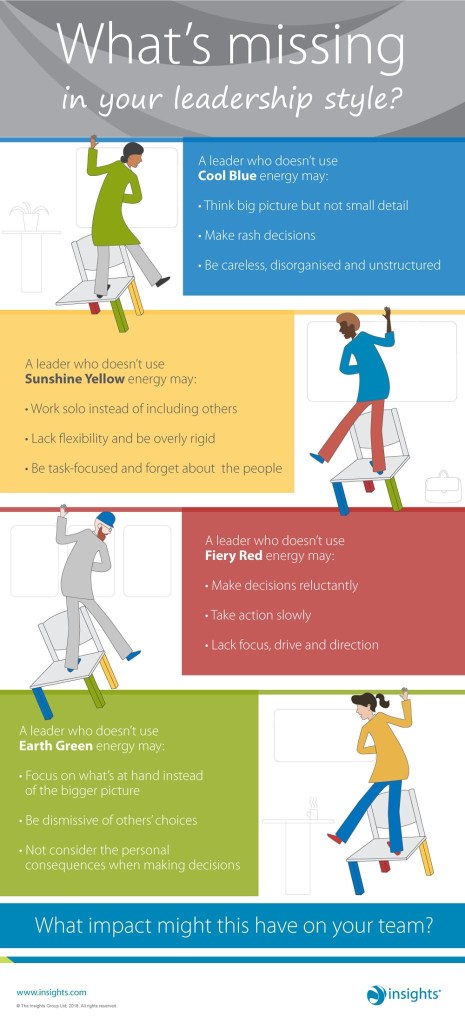
Coming from someone who typically leads with yellow energy, I know the importance of tapping into my “blue side.” If you usually embrace “Earth Green,” it may be important to tap into some “Red” qualities, such as taking decisive actions. How will you call upon your under-utilized colors today?
MARGARET SMITH IS A CAREER COACH, AUTHOR, INSIGHTS® DISCOVERY (AND DEEPER DISCOVERY) LICENSED PRACTITIONER, AND FOUNDER OF UXL. SHE HOSTS WORKSHOPS FOR PEOPLE WHO NEED CAREER OR PERSONAL GUIDANCE.
CHECK OUT MARGARET’S ONLINE LEADERSHIP COURSE.
Tags: Improving Leadership, Insights and Leadership, insights discovery leadership, leadership missing color, margaret smith career coach, margaret smith leadership
- Leave a comment
- Posted under Insights Discovery, Leadership
April 10, 2024 Developing Your Patience for Better Business

We are a society of instant gratification and quick rewards. We order a package from Amazon, it arrives within a day or two. We want to watch a show, we switch to our streaming platform of choice and tune in. We want a meal, we order online and receive it at our doorstep. With so many ways to instantly satisfy our needs and wants, many of us have forgotten how to practice patience.
Patience is a crucial attribute in both our personal and business lives. It can help us weather storms, create robust strategies, and maintain a sense of calm. When we’re patient, we also tend to be gentler and more civil to those around us, from the overworked barista to the co-worker who is juggling multiple responsibilities.
In my experience, patience is absolutely an asset when it comes to business. A patient leader…
…takes the time to get to know their team members.
…invests in skill-building training.
…collects data and gives projects a chance before changing course.
…strategizes and considers options before jumping in.
…recognizes that development and progress may take time (and celebrates small victories along the way).
Believe it or not, patience is a skill you can develop. Some people may be innately less patient than others—looking at you “red energy” and “yellow energy” folks (see my post on Insights® Discovery if you don’t get that reference)! However, all people can improve their patience. I suggest building patience with the following four steps:
Develop Awareness
The first step to becoming more patient is to recognize when you’re being inpatient or impulsive. Start noticing when you’re being short with others, or you’re tempted to make a decision or take an action before you have all the information. Once you start becoming aware of your own impatience, you can begin to correct this tendency.
Start Practicing
Start practicing patience in small, daily interactions. Pause before reacting to minor inconveniences, give people more time to express themselves fully, and allow projects to unfold at their natural pace. Over time, these small adjustments will become habits, and you’ll find yourself naturally more patient in various situations.
Challenge Yourself to Go One Step Further
After practicing daily patience, it’s a good idea to challenge yourself to apply it to more significant situations. When faced with a tough decision or a challenging project, consciously choose to approach it with patience. Allow the process to unfold without rushing to conclusions or taking shortcuts. When you’re tempted to give into an impulse say to yourself, “I can go just one step further.” That might mean waiting another day, asking one more person for advice, or doing just one more hour of research.
Recognize This Takes Time
As you’re developing your patience, you’ll have to (ironically) be patient with your progress! Developing a new skill takes time and consistent effort. Celebrate the small victories along the way, acknowledging that progress won’t happen overnight. But with concerted effort, you will eventually build this skill.
Patience is a virtue that can enhance your leadership skills, decision-making abilities, and overall well-being. Remember, by developing your patience, you’re not just benefiting yourself but also fostering a more positive and productive environment for those around you. Embrace the journey of building patience and enjoy the transformative impact it can have on your personal and professional life.
MARGARET SMITH IS A CAREER COACH, AUTHOR, INSIGHTS® DISCOVERY (AND DEEPER DISCOVERY) LICENSED PRACTITIONER, AND FOUNDER OF UXL. SHE HOSTS WORKSHOPS FOR PEOPLE WHO NEED CAREER OR PERSONAL GUIDANCE.
CHECK OUT MARGARET’S ONLINE LEADERSHIP COURSE.
Tags: develop patience, Margaret Smith business coach, margaret smith leadership, patience and leadership, patience as business asset, practicing patience for better business
- Leave a comment
- Posted under Advice from a Life Coach, Better Business, Leadership


 UXL Blog