Category Archives: Tips for the Job Hunt
January 18, 2017 Making the Job Hunt Personal Again

Hunting for and landing a job seems more complicated now than ever before. Most people hunt online for potential openings and therefore have to compete with, essentially, the entire world. It’s tough to stand out from the crowd with impersonal, uniformed job applications. Many online forms leave no room for creativity and, with many HR departments overwhelmed by the number of applicants, something as trivial as a certificate of completion or the college you attended can either make or break you.
How do you cut through the noise?
One of the solutions is to make the job hunt personal again. Here are four ways to do that:
1. Pick up the phone
The phone, you say? Like, an actual call?
Absolutely. With email and messaging, we’ve begun to develop a phobia of talking over the phone. Your phone call to an HR recruiter could make a huge difference. Just be sure to plan out what you’re going to say and put your best self forward. Don’t sound too “salesy;” be your wonderful, genuine self.
And don’t forget to have a purpose for the call. If you have a specific question, that’s a great reason to pick up the phone.
2. Tailor your resume to the position
You’re more likely to get noticed if your resume is tailored to fit the position for which you are applying. There is nothing wrong with highlighting certain parts of your experience, as long as the information is true. If you’re interested in a job and think it would be an excellent fit, take the extra time to refocus your resume around relevant areas of experience.
3. Find a referral
Most people now have a vast network of connections through social media. Use it! If a friend or acquaintance works at a company that you’d like to apply to, don’t be afraid to ask for a referral. A personal recommendation can go a long way and most HR professionals don’t mind getting them (personal recs can actually make the hiring process a little easier!).
Even if you don’t have any direct connections to an organization, you may have a secondary connection. You can see your secondary (or tertiary) connections on LinkedIn and ask a primary connection to introduce you to a secondary connection. This may seem like a stretch, but the generosity of others never ceases to amaze me.
4. Schedule an informational meeting
If you’re trying to break into a new industry, or would like to make a switch to a radically different company, consider setting up an informational meeting. Even if your company of choice isn’t currently hiring, reach out and see if someone will meet with you over a cup of coffee or lunch. Once you have the meeting arranged, be sure to prepare a list of thoughtful questions. Ask about the company, their mission, a typical work day, the ideal skill set someone in your dream position needs, etc.
Even if your meeting doesn’t lead to something right away, it may help your dream company keep you top-of-mind when they are looking to hire. OR, if nothing else, you will have gained some valuable information about a company and/or position that you idolize.
Set yourself apart by making the job hunt personal! Even in our age of technology, the hiring process is still very much built on human connections.
MARGARET SMITH IS A CAREER COACH, AUTHOR, INSIGHTS®DISCOVERY LICENSED PRACTITIONER, FOUNDER OF UXL, AND CO-FOUNDER OF THE TAG TEAM. SHE HOSTS WORKSHOPS FOR PEOPLE WHO NEED CAREER OR PERSONAL GUIDANCE. YOU CAN VISIT HER WEBSITE AT WWW.YOUEXCELNOW.COM


Tags: find a referral, get hired, Job hunt tips, margaret smith career coach, Margaret Smith life coach, personal job hunt, pick up the phone, tailoring your resume, you can get hired
- Leave a comment
- Posted under Interview Tips, Tips for the Job Hunt
September 7, 2016 The 2-Minute POWER-boosting technique
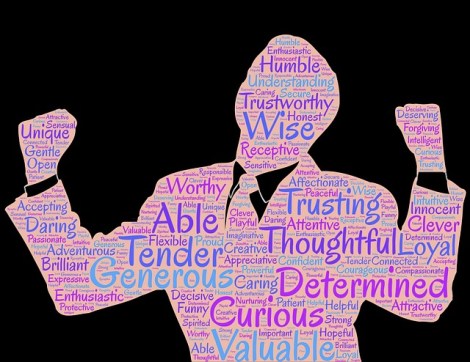
Social scientist Amy Cuddy studies nonverbal communication and how it relates to power. Through her research, she’s discovered some pretty incredible things about power dynamics, nonverbal signals, and how we can actually modify our mentality through physical actions.
Just like in the animal kingdom, humans puff up their chests and make themselves “big” if they perceive themselves to be in a position of power. On the flip side, people shrink down, hug their arms to their bodies, and lower their heads if they are feeling weak and vulnerable.
When we see someone posed in a “power position” or in a position of weakness, our brains automatically react. We are drawn to enthusiasm, confidence, and ease. From political candidates to doctors, we tend to gravitate toward displays of power.
But what if you don’t FEEL powerful? What if you doubt your abilities and lack self-confidence? Let your body language change your mind.
In Amy Cuddy’s studies, she has found that people who assume a power pose (opened chest, relaxed, arms wide) for as little as two minutes have higher levels of testosterone and lower levels of cortisol, which translates to more confidence and less stress. These people are able to cope with high-stress situations, such as a job interview, and are usually well-liked by others.
When you take on a power pose, something uncanny happens in the brain—it begins to believe that you are powerful.
When people question the authenticity of “faking it ‘til you make it,” Cuddy responds that she prefers the statement, “Fake it ‘til you become it.” The more frequently you tweak your nonverbals to indicate power and self-assurance, the more you’ll believe in that power. Eventually, you won’t have to fake it at all. You’ll elevate your confidence and approach situations with more comfort and poise than you used to.
Try assuming a power pose for two minutes the next time you are about to face a high-stress situation. It IS possible for your physical actions to change your brain!
To watch Amy Cuddy’s TED Talk, please click below:
MARGARET SMITH IS A CAREER COACH, AUTHOR, INSIGHTS®DISCOVERY LICENSED PRACTITIONER, FOUNDER OF UXL, AND CO-FOUNDER OF THE TAG TEAM. SHE HOSTS WORKSHOPS FOR PEOPLE WHO NEED CAREER OR PERSONAL GUIDANCE. YOU CAN VISIT HER WEBSITE AT WWW.YOUEXCELNOW.COM
Tags: 2 minute power boost, Amy Cuddy confidence, boost your confidence, career coach Margaret Smith, change your brain, confidence-boosting techniques, feel powerful
June 1, 2016 5 Minutes to a Better Cover Letter
 If you’re on the hunt for a new job, you’re probably well-aware of the importance of a compelling cover letter. It’s how you can stand out from the crowd, how you can demonstrate a slice of your personality that you really can’t convey in your résumé. It’s also a great way to take a deeper dive into some of your past experiences and really highlight your accomplishments.
How do you write a cover letter that gets noticed? Seems like a daunting task, right?
It doesn’t have to be. I’ve laid out several simple pointers below that will guide you through the cover letter writing process and help you create something that is polished and memorable.
Remember: Cover letters are not just a repeat of your resume—viewing them as such will put you at a serious disadvantage.
Cover Letter Basics:
- Name, address, and date at the top of the letter
- Cover letter addressed to a specific person if possible. If individual unknown, send letter to the title of recipient (Production Manager, Technical Director, Human Resources, etc.)
- State your interest in the position
- Make note of special skills that qualify you for the job
- Provide contact info and a time you can be reached
- Thank the contact and close with “Sincerely”
- Always ask someone else to proofread your letter and resume—don’t miss simple grammatical errors!
- Sign your letter with either blue or black ink, NO EXCEPTIONS
- Be concise and to the point (no cutesy statements or overbearing comments)
- Use the same paper as your resume
- Avoid using “I” too often or repeating the same words
Beyond the Basics:
- Focus on two (or, at the max, three) major accomplishments in your career and really dive into them
- Use concrete facts whenever possible. For example:
- I saved XYZ Company $3.5 million dollars in their annual budget by…
- During my time at ABC Inc., I trained over 200 people in…
- I helped Company X grow by 4% through my….
- I was the top salesperson at ABC, Inc., selling $$ annually
- Let your authentic voice come through, but don’t sound too casual. It’s a fine line to ride and you may need a friend to weigh in.
- Do your homework. Understand the company’s values and what they’re looking for in a new employee and make sure you highlight those parts of your experience.
Interested in learning more about creating an effective cover letter or interested in consulting a professional to ensure that you land that next job opening? Contact Me Today to learn about career coaching and UXL’s public workshops!
MARGARET SMITH IS A CAREER COACH, AUTHOR, INSIGHTS®DISCOVERY LICENSED PRACTITIONER, FOUNDER OF UXL, AND CO-FOUNDER OF THE TAG TEAM. SHE HOSTS WORKSHOPS FOR PEOPLE WHO NEED CAREER OR PERSONAL GUIDANCE. YOU CAN VISIT HER WEBSITE AT WWW.YOUEXCELNOW.COM
Tags: 5 minutes to better cover letter, career coach cover letter, career coach Margaret Smith, cover letter basics, cover letter protips, Cover Letter Tips, create a better cover letter, resume and cover letter, stand out cover letter, UXL career coaching, writing practices cover letter


 UXL Blog