Category Archives: Leadership
February 4, 2015 How to Train Millennials
Millennial workers are the future. The generation born between 1980 and 2000 currently comprises 36% of the workforce and 15% of all leadership roles in the United States, and will continue to grow as members of the Baby Boomer generation retire. Although some workers like to dismiss the Millennial generation as “disloyal” or “entitled,” much of this negative labeling comes from fundamental misunderstandings between generations. Because Millennials will soon be the most prominent demographic in the modern workforce, I decided to dedicate the month of February to this generation. Whether you’re training Millennials, working alongside them, or you are a Millennial, this series should be useful to you. To kick off, I will first discuss training techniques.
Many organizations are not keen on the idea of overhauling their entire employee training program. Yes, it can be costly and time-consuming, but it is an absolutely essential step to take if you want to attract new talent and set up new hires for success. And there’s an additional bonus: According to Sweetrush Training, “Applying these [new training programs] will make your training stronger and more effective for everyone — not just Millennials.” That’s because older generations have many of the same tendencies as Millennials, including a positive response to feedback and an interest in interactivity.
The following is a list of some typical Millennial traits and how they translate into workplace training:
1. Millennials are goal-oriented and like clarity
Before delving too deeply into your training program, give your Millennial trainees a high-level overview of what you’re going to cover and what they need to know. According to Vivid Learning Systems, “Helping them understand early on what is expected of them helps them not only succeed in training but also on the job. You can do this by clearly communicating training objectives, informing trainees about what information they will be evaluated against and how they will be evaluated, and providing an opportunity for Millennials to ask questions and clarify expectations early on.”
2. Millennials learn better by doing than seeing
To put it frankly: lecture-style training sessions do not work. Most Millennials have grown up with interactive classrooms in which the teacher promotes learning through games, roleplaying, labs, and asking questions. Actually, this kind of interactive learning environment works well for people in all generations. Instead of talking at your trainees and flipping through powerpoint slides, try something more engaging. Use case studies, group work, scenarios, video clips, question and answer sessions, etc. You’ll find that this training style will keep your Millennial hires interested and help them better retain what they’ve learned.
3. Technology is second-nature for Millennials
Whether it’s videos, online forums, training software, simulations, or interactive Smartboards, incorporating technology into your training program is essential. Millennials are comfortable with technology and readily turn to it for both education and entertainment. By weaving technology into your training program, you’ll find that Millennial trainees will stay engaged and your company will appear to be more relevant and modern in their eyes.
4. Millennials are interested in collaboration
According to USA Today, studies show that “Millennials actually like to work in teams more than their elders.” This may seem counter-intuitive, given most Millennials’ attraction to technology (and the amount of time they spend engaged with their smartphones), but a full 60 percent of Millennials would prefer to collaborate in person vs. online (34 percent) or via phone or videoconference (6 percent). An added bonus of including group activities in your training program is that the new hires will get to know each other and begin to form bonds. Given that a positive work environment is typically very important to Millennials, it’s a great idea to get them working alongside and befriending their peers right away.
If you have any questions about creating a new training program for the next generation of workers, please do not hesitate to contact me today.
Tags: the millennial generation, train millennial workers, Training Millennials, understanding millennials, workplace training for new hires
January 14, 2015 Create an Interactive Talk
You’ve all seen it—that mind-numbingly boring presentation that makes your thoughts wander and your eyelids droopy. Or maybe you’ve been the presenter and you noticed your audience’s attention slowly start to drift as they checked their cell phones or doodled in notebooks. But how to engage today’s audience with their short attention spans and long to-do lists? Here are five ideas for jazzing up your presentation and getting people interested:
1. Get people moving
I like to start my presentations by getting my audience up, out of their seats, and moving around. I usually start with some kind of prompt like, “Find the people in the room with the same birth month as you,” or “Find people wearing the same color shirt as you” and gather together. Then, I ask questions relating to my topic and have the group brainstorm answers. This gets people talking to each other and mingling and it energizes the audience for the rest of the presentation.
2. Show YOUR energy
An audience often follows its speaker’s lead. If you don’t seem excited about the topic you’re presenting, why should anyone else? Step away from the podium, use your hands to gesture, show excitement in your tone of voice. I periodically ask open questions to the audience to keep them engaged. Also, don’t forget to smile! Your positive energy has a direct effect on those watching.
3. It’s all about images
Have you ever seen a PowerPoint presentation that is filled with text? What do you tend to do when the speaker is speaking? That’s right, you read the text! Instead of filling your slides with words, use as many images as possible. Images keep people engaged without distracting them and they act as a prompt to help you remember your place. If you do decide to add some text, keep it to under 20 words per slide. Anything more is overkill and will most likely be too small to read anyway.
4. Use smart handouts
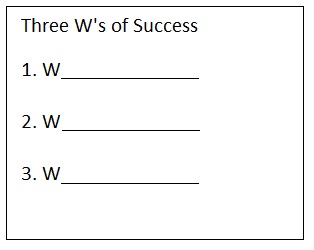
Handouts are nothing new—it’s useful to have a brochure or postcard about your presentation waiting at the seat of each audience member—but some handouts are better than others. The most effective handouts are the ones that keep the audience’s attention throughout your talk. I’ve found that fill-in-the-blank handouts work great if you want people to really engage with what you are saying. They force your audience to pay attention and listen for when you’ll give them the answer to the next blank space. Here’s an example:
 5. Make it personal
Know your audience. If you’re talking to a group of teachers, make specific references to the educational field; if you’re talking to a group of bankers, reference finance in your talk. You don’t have to be over the top with your references, but you do want to make your audience realize the value of your words and understand how, specifically, your presentation relates to them. That way, they won’t be left wondering how to apply the information you gave them.
Take the boredom and drudgery out of presentations. Apply these five steps and I guarantee you’ll have a room full of alert, interested audience members and chances are you’ll enjoy the presentation as well!
Tags: interactive presentation, interactive speaking, keep your audience interested, keep your audience's attention, Margaret Smith, outstanding presentation, UXL
- Leave a comment
- Posted under Communication, Leadership, Tips for Improving Interactions


 UXL Blog