Category Archives: Leadership
September 7, 2016 The 2-Minute POWER-boosting technique
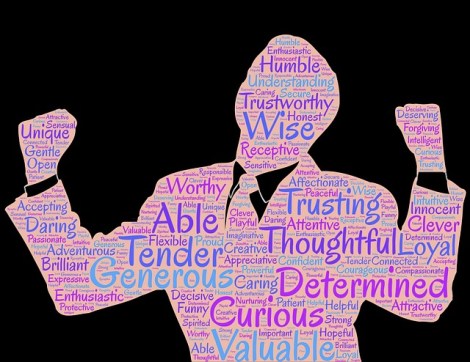
Social scientist Amy Cuddy studies nonverbal communication and how it relates to power. Through her research, she’s discovered some pretty incredible things about power dynamics, nonverbal signals, and how we can actually modify our mentality through physical actions.
Just like in the animal kingdom, humans puff up their chests and make themselves “big” if they perceive themselves to be in a position of power. On the flip side, people shrink down, hug their arms to their bodies, and lower their heads if they are feeling weak and vulnerable.
When we see someone posed in a “power position” or in a position of weakness, our brains automatically react. We are drawn to enthusiasm, confidence, and ease. From political candidates to doctors, we tend to gravitate toward displays of power.
But what if you don’t FEEL powerful? What if you doubt your abilities and lack self-confidence? Let your body language change your mind.
In Amy Cuddy’s studies, she has found that people who assume a power pose (opened chest, relaxed, arms wide) for as little as two minutes have higher levels of testosterone and lower levels of cortisol, which translates to more confidence and less stress. These people are able to cope with high-stress situations, such as a job interview, and are usually well-liked by others.
When you take on a power pose, something uncanny happens in the brain—it begins to believe that you are powerful.
When people question the authenticity of “faking it ‘til you make it,” Cuddy responds that she prefers the statement, “Fake it ‘til you become it.” The more frequently you tweak your nonverbals to indicate power and self-assurance, the more you’ll believe in that power. Eventually, you won’t have to fake it at all. You’ll elevate your confidence and approach situations with more comfort and poise than you used to.
Try assuming a power pose for two minutes the next time you are about to face a high-stress situation. It IS possible for your physical actions to change your brain!
To watch Amy Cuddy’s TED Talk, please click below:
MARGARET SMITH IS A CAREER COACH, AUTHOR, INSIGHTS®DISCOVERY LICENSED PRACTITIONER, FOUNDER OF UXL, AND CO-FOUNDER OF THE TAG TEAM. SHE HOSTS WORKSHOPS FOR PEOPLE WHO NEED CAREER OR PERSONAL GUIDANCE. YOU CAN VISIT HER WEBSITE AT WWW.YOUEXCELNOW.COM


Tags: 2 minute power boost, Amy Cuddy confidence, boost your confidence, career coach Margaret Smith, change your brain, confidence-boosting techniques, feel powerful
May 18, 2016 What is the difference between a BOSS and a LEADER?
On the surface, the words “boss” and “leader” sound pretty synonymous. What is the difference, anyway? I think that the image below does a great job of illustrating the main differences. Let’s break it down…
-
A Leader is in the trenches
Both leaders and bosses give instructions, but unlike a boss, a leader helps to carry out the actual work. She pulls her weight, alongside the rest of her team. A good leader inspires others by demonstrating that she is invested in whatever project the team is working on.
-
A Leader understands the team
Since a leader is working alongside his team, he understands how everyone clicks and what strengths and weaknesses each team member possesses. This knowledge helps the leader assign appropriate tasks to individuals and helps him understand the specific work style of each person on the team. By showing a genuine interest in each team member and taking the time to get to know everyone, the leader can easily identify when people are either discontent or thriving.
On the flipside, great leaders open themselves up to others. They practice transparency and, since they have nothing to hide, they don’t mind others getting to know their true, authentic selves.
-
A Leader has vision
Instead of being reactive, a leader is proactive. The leader has an intimate knowledge of the work that is being undertaken and can therefore point the team in the right direction. That isn’t to say that the leader should micromanage to ensure that a task or project is done in a certain way. Rather, she should offer guidance and allow the team to figure out the details on their own.
-
A Leader motivates the team
Instead of reprimanding or belittling the team, a leader builds his team up. By offering encouragement and constructive critiques, a good leader will develop a team that is inspired, motivated, and productive.
-
A Leader keeps moving
Great leaders are humble enough to realize that they don’t know everything. They aspire to keep growing and changing; they move forward and take their team with them. When a roadblock gets in their way, great leaders don’t throw in the towel or turn around. Instead, they strategize with their team on how to overcome the obstacle and continue moving forward (or in a new direction).
Do you feel like more of a boss or a leader? Take a few minutes to think about these five qualities of a great leader and consider how you can embrace your leadership.
Need more guidance? Reach out and contact me today.
MARGARET SMITH IS A CAREER COACH, AUTHOR, INSIGHTS®DISCOVERY LICENSED PRACTITIONER, FOUNDER OF UXL, AND CO-FOUNDER OF THE TAG TEAM. SHE HOSTS WORKSHOPS FOR PEOPLE WHO NEED CAREER OR PERSONAL GUIDANCE. YOU CAN VISIT HER WEBSITE AT WWW.YOUEXCELNOW.COM
Tags: authentic leadership, boss vs leader, career coach Margaret Smith, difference between boss and leader, leadership in the workplace, UXL career coaching, what it means to be a great leader
- Leave a comment
- Posted under Better Business, Goals, Leadership, Teamwork, Thrive at Work, Uncategorized
May 11, 2016 The Surprising Habits of Original Thinkers [TED Talk]
“Originals are not that different from the rest of us. They feel fear and doubt, they procrastinate, they have bad ideas. And sometimes it’s not in spite of those qualities, but because of them that they succeed.” -Adam Grant

One of the great lessons I learned from Adam Grant’s recent TED Talk is that we shouldn’t write off people who have unconventional work styles or ways of doing things. Many inventive, creative people do not like to think linearly or complete tasks in step-by-step ways. Instead, they work best when they are given time to explore many different avenues or even step away from the task-at-hand for a while.
On the surface, this might seem like procrastination or a lack of motivation, but it is a part of many people’s creative process. Grant says, “Procrastination gives you time to consider divergent ideas, to think in nonlinear ways, to make unexpected leaps.”
Another thing original thinkers have in common: they have failures. They often explore many different routes before landing on a great idea. As Grant articulates, “The greatest originals are the ones who fail the most because they’re the ones who try the most.”
It’s like playing a game of darts. If you just keep making throws, you’ll likely hit your mark eventually.
As a leader, try to recognize the traits of original thinkers on your team and encourage their creativity and ingenuity.
And if you’re an original thinker? Embrace it! Realize that you might work differently than others, but your way of doing things probably works best for you.
To watch the full TED Talk (which I highly recommend), please click below.
MARGARET SMITH IS A CAREER COACH, AUTHOR, INSIGHTS®DISCOVERY LICENSED PRACTITIONER, FOUNDER OF UXL, AND CO-FOUNDER OF THE TAG TEAM. SHE HOSTS WORKSHOPS FOR PEOPLE WHO NEED CAREER OR PERSONAL GUIDANCE. YOU CAN VISIT HER WEBSITE AT WWW.YOUEXCELNOW.COM
Tags: adam grant Ted talk originals, career coach Margaret Smith, creative thinkers, habits of original thinkers, leading creative thinkers, leading creatives, original thinkers, original thinkers adam grant, thinking creatively, UXL career coaching


