Category Archives: Better Business
April 23, 2025 Help Others to Adapt (by Leveraging Your Strengths)

In my last post, I discussed the variety of ways in which people process and cope with change. While change might excite and energize some, others may feel discouraged or frightened by it. This, of course, can depend on what type of change we’re dealing with, and the circumstances around it. It also depends on a person’s personality and ways of processing change.
These concepts can all be tied to Insights® Discovery, a science-based program which helps people become better acquainted with themselves, their personal tendencies, how they react or adapt to certain situations, and more. (See my last post for more information on the program.) Suffice it to say, we all have different methods for dealing with change, and some of that is driven by our personal attributes and inclinations.
No one is flawless when it comes to fielding change. We all have areas of improvement, but we also have areas of strength. To help others cope with change, I’d like to challenge you to think about your personal strengths and how they can be an asset. Let’s discuss some of the strengths you might have:
You’re Research- or Data-Oriented
If you’re the type who likes to have the full, evidence-based picture before proceeding, you can play into this strength to help facilitate change. During times of uncertainty, research and data can assist us by painting a better picture of a situation (whether for better or worse!). And that, in turn, can help people understand how to move forward.
When leaning into this strength, keep in mind that not everyone sees the world as you do, so it’s a good idea to present the data in a way that is easily understood and digestible.
Note: these traits are associated with “blue energy” on the Insights® Discovery color wheel.
You’re a Go-Getter
For some, change is exciting and energizing. It feels like an opportunity to create a new, better reality. Even if a situation may seem negative on the surface, someone with a go-getter personality will want to move forward, experiment, and try out the new normal. While it is often a good idea for gregarious types to slow down, consider repercussions, and examine the data, it is also a good thing to have this type of movement-focused energy.
To help others, it’s prudent to channel some of this energy into concrete actions. Pinpoint a few reasons to get excited about the change and/or discuss a few ways of implementing the change as effortlessly as possible. Alternatively, if a certain change seems wholly terrible, a go-getter will develop strategies to refute or rework the change into something better. In short, let your enthusiasm be contagious and propel positive change.
Note: these traits are associated with “red energy” on the Insights® Discovery color wheel.
You’re Empathetic and Big-Hearted
Some people are defined by being caring and empathetic, often placing others’ wellbeing before their own. These compassionate souls can help either facilitate a change or soften its blow by considering how certain people (or groups of people) will react to or be affected by the change. Since the world (and workplace) is comprised of all types of people with different background and beliefs, it is tremendously valuable to be able to think beyond yourself and put yourself in others’ shoes.
This way of thinking can lead to adapting plans that work for a wide array of people, OR personalizing strategies to cater to certain groups. Perhaps certain aspects of a certain change will work for specific people, while other aspects should be rejected or reconsidered. Whatever the case, those with empathy are well-equipped to lead people-centered actions.
Note: these traits are associated with “green energy” on the Insights® Discovery color wheel.
You’re Creative
Some moments require creative minds and out-of-the-box thinkers to take the lead. These personality types can examine a difficult situation and start thinking of ways to rework it, move around it, or reject it. Creative solutions can help people dealing with a major change OR they can help to reinvent/rethink the change so it works better for more people.
If we pair creative types with those who prefer to lean on evidence and research, we can create a powerful team that, in theory, balances data with innovative solutions.
Note: these traits are associated with “yellow energy” on the Insights® Discovery color wheel.
No matter your personality, you have the capability to help others deal with change. Whether you’re opposed to or supportive of the change, you have the power to navigate it, using your unique strengths and personality traits. Start thinking about your personal attributes as your superpowers!
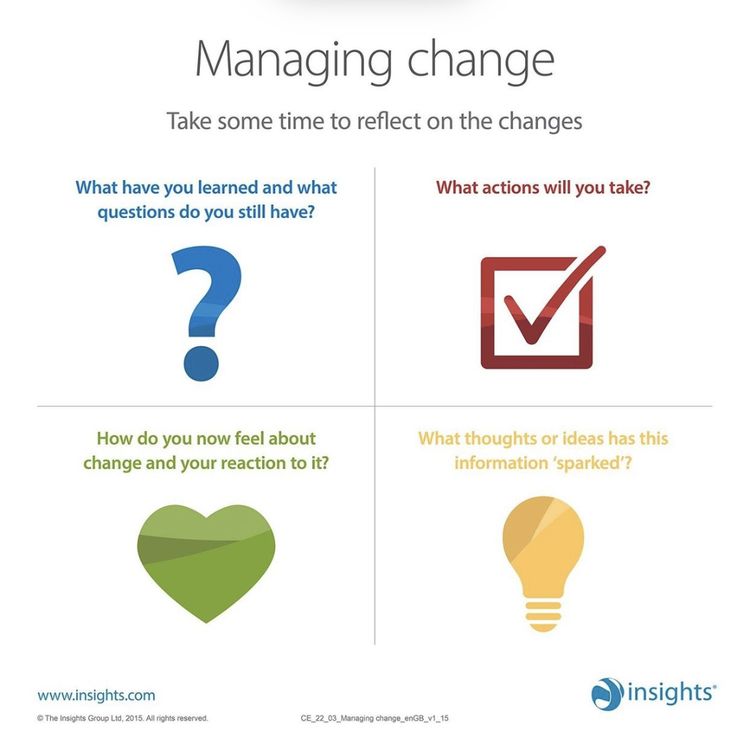
BONUS: Insights® Discovery provides a chart for the four major personality types (color energies) to manage change. I encourage you to take a look:
MARGARET SMITH IS A CAREER COACH, AUTHOR, INSIGHTS® DISCOVERY (AND DEEPER DISCOVERY) LICENSED PRACTITIONER, AND FOUNDER OF UXL. SHE HOSTS WORKSHOPS FOR PEOPLE WHO NEED CAREER OR PERSONAL GUIDANCE.
CHECK OUT MARGARET’S ONLINE LEADERSHIP COURSE.
Tags: Assist with Change Tap into Strengths, help others adapt, Helping Others with Change, Insights Discovery strengths, Leverage Your Strengths, Margaret Smith licensed Insights practitioner, Margaret Smith Minneapolis career coach, Personality Traits and Change
- Leave a comment
- Posted under Better Business, Insights Discovery, Teamwork
February 5, 2025 6 Compassionate Leadership Actions

I am a big proponent of heart-led leadership. So many leadership courses, books, and webinars teach us that leaders have to be firm, competent, excellent communicators, and assertive. While those traits can be helpful in leadership, I would put a different trait above them: compassion.
When people think about compassion and kindness in leadership, they may think that means the leader is soft or a “pushover.” In my experience, however, kindness does not automatically mean weakness. It is very possible to be both kind and assertive. It is possible to genuinely care about your people and create firm boundaries and expectations.
Instead of a weakness, I see kindness as a superpower. When you take the time to truly get to know your people, listen to them, and offer genuine compassion and respect, you foster a positive work environment where people want to show up and do good work. When people feel that they are part of a caring team, they will want to put their best foot forward, meet deadlines, and perform at their peak. They’re motivated to do better, because they know the company’s leadership has a vested interest in them and their success.
To establish yourself as a kind, caring leader, you can begin by taking a few action steps that convey your heart-led leadership style. Here are 6 suggestions:
Schedule One-on-Ones
Even busy leaders can find fifteen or twenty minutes to meet one-on-one with a team member. Taking the time to check in with someone individually will not only convey that you care, but will also provide some valuable time for you to get to know the person across the table on a personal level. This can be difficult to achieve in group settings, especially if the person is not terribly open or outspoken.
Get to Know Your People
When engaging in one-on-ones, it’s a good idea to ask a few “get to know you” questions. Start learning about your team members’ backgrounds, families, pets, and interests, and be sure to touch on these things in subsequent meetings (“How is your mom? Is she feeling any better since her accident?”). If you need help remembering details about others, try creating a spreadsheet dedicated to tracking information about each team member—the name of their kids, the type of dog they have, etc. Few people have a perfect memory, and there’s no shame in using a tool to help yourself out.
Open Up
When you’re getting to know others, it is important to reciprocate. Any relationship, including work relationships, are healthiest when they are a two-way street. Offer information about yourself when it seems relevant and appropriate. For example, if your team member is talking about an upcoming vacation, you might tell them a little about your experience visiting that area, or you could talk about your own upcoming trip.
Ask Good Questions (and Listen!)
Asking good questions is an art. When sitting down with someone, it’s important to not just talk at them or ask yes/no questions. Instead, ask open-ended questions that prompt a dialogue. These types of questions can help you get to know the other person and will help you gauge the temperature of the workplace (Are tempers hot? Has enthusiasm for a project or client cooled?).
But asking questions isn’t enough. It is also critical to listen to the answers and attempt to understand the other person’s perspective. If you’re unsure about what someone is saying, or you need more details, be sure to ask follow-up questions. Alternatively, you could repeat back what you think you heard by saying, “It sounds like you’re saying XYZ, is that correct?”
Show Genuine Appreciation
Pay attention to your people and show them appreciation whenever they go above and beyond. Call out outstanding performance, recognize achievements, or write out a thank you card. These small acts can make an enormous difference.
Take Action to Improve the Workplace
When sitting down with your people, you might discover that they are unhappy with certain aspects of the workplace. If that’s the case, it is imperative to take steps to create change. You don’t want to be the type of person who is all talk and no action. Rather, if you are genuinely committed to being a positive presence, that means taking meaningful action to improve the workplace and the lives of the people who work for you.
Kindness and compassion are not incompatible with strong leadership. Rather, it can help improve morality, foster a better work environment, and create an energized atmosphere in the office. How might the modern workplace transform if all leaders chose to be kind?
MARGARET SMITH IS A CAREER COACH, AUTHOR, INSIGHTS® DISCOVERY (AND DEEPER DISCOVERY) LICENSED PRACTITIONER, AND FOUNDER OF UXL. SHE HOSTS WORKSHOPS FOR PEOPLE WHO NEED CAREER OR PERSONAL GUIDANCE.
CHECK OUT MARGARET’S ONLINE LEADERSHIP COURSE.
Tags: compassionate leadership, heart-led leadership, kind leadership, leadership best practices, leadership tips, margaret smith leadership, Margaret Smith UXL
- Leave a comment
- Posted under Better Business, Communication, Leadership
October 9, 2024 Dedicating Time to Work ON, Not Just IN, Your Business

When you run your own business, it is easy to become completely immersed in your work. You may have multiple clients to juggle, various meetings to attend, or a never-ending stream of tasks to complete. While this level of immersion can be productive in the short-term, it’s important to also step back and work on your business, rather than just in it.
Taking the time to examine and reflect on your business allows you to focus on the bigger picture, identify areas for improvement, and make strategic decisions that will drive long-term growth. Temporarily removing yourself from the day-to-day operations can give you some perspective and help you become a more effective business owner.
Although many people understand that working on their business is a good idea, they might resist doing so due to perceived time constraints, a fear of neglecting current responsibilities, or a lack of clarity on how to effectively work on their business. However, making time for strategic planning and reflection is crucial for long-term success. By prioritizing this type of work, business owners can identify opportunities, address challenges, and position their company for growth.
To overcome mental barriers related to working on your business, I suggest the following tips:
Set Aside Time
If you’re like many people, if it’s not on the calendar, it’s not getting done. That’s why it’s a good idea to intentionally schedule dedicated time for strategic planning, reflection, and tasks related to your business as a whole. Block off time in your calendar and treat it as an important meeting. To simplify scheduling, consider making this a recurring appointment by setting your calendar to block off this time every month or every other week.
Prioritize
It’s important to identify specific areas of your business that need attention, such as marketing, operations, or financial management. Try listing specific tasks that need to be completed and ranking them in order of priority. Then, focus your efforts on these key areas when working on your business. This will help ensure that you’re making the most impactful changes and improvements.
Seek Outside Perspective
Talking to trusted advisors, mentors, or industry peers can provide valuable insights and a fresh perspective on your business. They may be able to identify areas for improvement or offer suggestions that you hadn’t considered. You could also collect feedback from clients (if it seems appropriate), asking them questions such as, “Do you find my website easy to navigate? What would you change?” Or: “How did you originally hear about my business?” Don’t be afraid to ask for input and feedback to help guide your strategic planning.
Break Down Larger Goals
Some goals for your business may seem overwhelming or intimidating. If that’s the case, it’s a good idea to break down these larger objectives into smaller, actionable steps that you can tackle incrementally. That way, you can make steady progress without feeling bogged down by the enormity of the task. Celebrate small wins along the way, as they’ll help keep you motivated and focused. Remember, even small improvements can have a big impact over time. By breaking down your goals, you’ll be able to tackle them in a more manageable and sustainable way, ultimately driving your business forward.
While it may require some initial effort, the benefits of working on your business rather than just in it can be transformative for your organization’s trajectory. By carving out dedicated time to focus on the bigger picture, you can gain valuable perspective, identify strategic opportunities, and make informed decisions that will propel your business forward. Embracing this approach can help you become a more effective leader, drive sustainable growth, and ultimately achieve your long-term goals. Remember, the time you invest in working on your business is an investment in its future success. Embrace this practice, and watch as your company reaches new heights.
MARGARET SMITH IS A CAREER COACH, AUTHOR, INSIGHTS® DISCOVERY (AND DEEPER DISCOVERY) LICENSED PRACTITIONER, AND FOUNDER OF UXL. SHE HOSTS WORKSHOPS FOR PEOPLE WHO NEED CAREER OR PERSONAL GUIDANCE.
CHECK OUT MARGARET’S ONLINE LEADERSHIP COURSE.
Tags: business logistics planning, business planning, Margaret Smith business coach, Margaret Smith professional speaker, work on not just in business, working on business
- Leave a comment
- Posted under Better Business, Goals


 UXL Blog