Tag Archives: Networking
September 4, 2012 Body Language, And Why It’s Important
Body language has the ability to speak volumes when we communicate with others, often making a stronger impression in their memory than our words. In fact, 55% of communication comes from body language. It’s important to be aware of how your posture, facial expressions and eye movement affect your overall impression when talking to a client or shooting for the big promotion.
Most of us understand body language very well and assume we also possess good “body speak.” However, you’d be surprised how many people I encounter who could work on this very important skill. Take a person involved in a team meeting for instance, who, rather than stay engaged in conversation and not miss opportunities to share in amazing problem solving, instead becomes overwhelmed with his Blackberry.
The reason why body language is so powerful is because it mirrors your internal thoughts and feelings. To illustrate this, let’s go over the what’s, how’s and why’s of positive body language.
Eye contact (or lack thereof) shows how attentive you are. Maintaining eye contact throughout a conversation clearly tells the other person that you care about them, that you’re listening, and that you are trying to form a connection with them. On the flip side, frequently losing eye contact to little distractions suggests that the person before you is only slightly more interesting than other things going on around you. Don’t do this! Prove you’re listening through your steady, confident gaze. It’s okay to blink!
Keeping your body turned toward the person you’re speaking with is a physical sign that you are opening yourself up to them, ready to devote your time and full attention. It gives off the impression that your guard is down, that you trust them, and that they are welcome. This may sound like a no-brainer, but the alternative to this stance—having your body turned partially away—gives off a defensive signal, so you’ll want to be aware of how you sit/stand.
Your hands…what to do with them? To piggyback on the above point, your hands, arms and shoulders should coincide with your open body stance in order to say, “You are welcome, I trust you, and you are worth my time.” Crossed arms, tensed shoulders and fidgety hands display discomfort and/or distrust. This is a big no-no! Keep those shoulders relaxed and those arms open. Particularly, crossing your arms conveys a judgmental attitude; conversation is all about finding common ground, and you won’t be able to do this unless your body shows that you’re willing.
While these may seem obvious, it is never a bad idea to brush up on your skills. Here are a few less obvious body language cues which may take time to become aware of and utilize, but are of equal importance:
Being still. It is easy to get tensed up and fidgety, especially when you’re in an interview or giving a presentation. Maintaining a calm, relaxed stance in any situation shows confidence when you speak and provides comfort and welcoming when you listen. The trick? Breathe! Slow, deep breaths calm you, allowing you to be still, engaging, attentive.
Nodding. Nodding is the universal “I follow you” sign. How can you possibly mess up something so simple? One word: Speed. Overly-fast, excessive nodding can be overwhelming and distracting to the person you’re speaking with. It also gives off the impression that you’re impatient, rushing them to the finish. This can make for a jarring experience for the other person. Instead, nod only when you really do agree or follow, and ask strong questions when you do not. Like the point above, when you do nod, it should be slow, calm, smooth.
Leaning forward. You’ll find that you do this naturally when you’re engaged in something, be it a conversation, a ball game or your favorite TV show. Leaning backward communicates that you’re hesitant to engage with a person in conversation.
These small body cues go a long way. They help a person remember you, and if your body language is positive, the memory of their experience with you will follow. Practice these skills in front of a mirror, or with a partner. But also make an effort to become more aware of other people’s body language as you go about your day. How did certain poses, expressions, or behaviors make you feel? Paying attention to these cues will help you hone in on your own body language, and you can tweak your skills from there.
Tags: Career Coach Advice, Confident Interviewing, Improving Relationships, Networking
- Leave a comment
- Posted under Communication, Uncategorized
July 25, 2012 No Sweat, No Fail Networking
By Margaret Smith, UXL: Creating Successful Leaders
SPEAKER | CAREER COACH | CERTIFIED INSIGHTS DISCOVERY PRACTITIONER
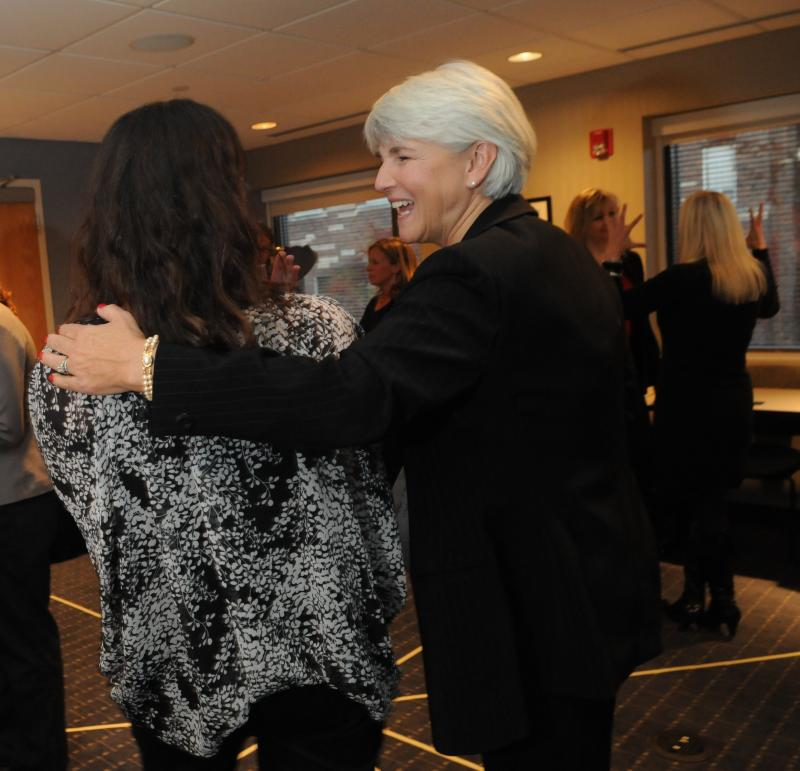
Networking… Just the shear mention of the word makes my knees buckle and my deodorant is challenged.
Networking is, however, one of the most important skills to perfect, no matter where you are on your career journey. Did you know that more than 80% of jobs today are found through contacts, not over the internet or by blindly sending a resume.
You’ve probably familiar with the phrase “It’s who you know, not what you know”, and for a period of time, a lot of us could afford to ignore this little axiom. Well, the times certainly have changed. Now, more and more people are discovering the truth behind this common message.
Today, your contacts (and your contact’s contacts) are the real door openers to the interview.
Networking is essential to the job hunt, but it’s not limited to those looking for employment. Even if you currently have a job, a new position may be searching for you. If you don’t have the right connections internally your name may not come up—opportunity missed!
No Sweat, No Fail Networking
The first step is to figure out where to go. Where can you find the people that you need to meet—where do they hang out? Find the events and activities that attract the people and organizations you need or want to meet.
The 3 Parts of Successful Networking:
1) Know your Audience: Who will be there? Who do I need/want to meet? How do I “show up”?
2) Have an Objective: Is my objective to collect 15 business cards or to meet the 3 most influential people at the event? You will achieve what you set your mind to do.
3) Be Prepared and Practice: Know how you will introduce yourself, what you do or what you want. Make sure you have a request ready, such as “May I call you next week to set up some time to learn more?” or “Whom in your organization is involved in what I am interested in?” or “Who do you suggest I meet here tonight?”
Practice is the fun part. Stand in front of the mirror, watch your body language, smile, and figure out ways to share your energy so people enjoy their encounter with you.
Don’t forget to follow up via phone or email with the people you meet and remind them of something from your conversation.
Okay, now my knees stopped shaking and I am writing down my introduction so I can practice for that event on Monday night…Good luck!


 UXL Blog