Tag Archives: Margaret Smith licensed Insights practitioner
March 16, 2022 4 Ways to Create Calm

Almost everyone experiences periods of heightened anxiety or frustration. Those periods might last a few minutes, or they could endure much longer. If you’re dealing with a situation that is causing increased stress, it’s never a good idea to ignore your feelings and hope that everything will get better. Instead, focus on ways to reduce your personal stress AND remove or diminish the sources of stress.
NOTE: If you’re experiencing long-term or severe anxiety, it’s best to seek help from a licensed therapist or psychiatrist. Your mental health is important and can affect nearly every aspect of your life.
So, how do you deal with short-term stress or anxiety? Here are 4 methods to try.
1. Practice a breathing technique
Breathing with intention is a great way to create a sense of calm and ease tension. You could practice yoga-style breathing, where you inhale deeply while focusing on expanding your lungs and belly, and then release your breath and let your diaphragm contract. Or, you could practice something neuroscientist Andrew Huberman calls a “physiological sigh.” Essentially, you inhale through your nose and hold your breath for a few seconds. Then, inhale again before releasing it and hold for a few more seconds. After that, exhale through your mouth in one strong puff. Learn how this breathing technique helps you in Dr. Huberman’s short video.
2. Remove yourself from the situation
Sometimes, the easiest and most effective way to calm your nerves is to remove yourself from the anxiety-inducing situation. That might mean excusing yourself from a team meeting or Zoom call, or stepping away from your laptop for a few minutes. Giving yourself distance can help you to collect your thoughts, take a few deep breaths, and plan how you’ll proceed.
3. Identify sources of stress
Is there something in your life that is repeatedly causing you stress? Maybe you’re involved in too many committees or volunteer groups. Maybe you tend to agree to projects, even when your plate is full. Or, perhaps, your source of stress is a person—a boss or co-worker who tends to email you at odd hours, overload your agenda with work, or make poor decisions for the company or your work team.
Whatever the case, it’s useful to trace back your stress to the source(s). Once you have a clear idea of what’s causing most of the tension in your work life, you can take steps to change it.
4. Set healthy boundaries
One way to take charge of your stressors is to set healthy boundaries. Set parameters for when and how often you’ll answer emails, phone calls, or virtual chat requests. Say “no” to projects when you have too much on your plate or when projects are not a good fit (click the link for 10 effective ways to say no). If someone is causing you undue stress, have the courage to meet with that person and communicate your frustrations. Be tactful and make suggestions on how to improve the situation.
You can take charge of workplace stress. Take time to consider your stressors, create a plan, and act! And when life gets frustrating, don’t be afraid to dismiss yourself from the situation, breath, go for a walk, or even read a few pages in a book—whatever it takes to reduce your stress and calm your nerves. Work should not be a place of constant stress.
MARGARET SMITH IS A CAREER COACH, AUTHOR, INSIGHTS® DISCOVERY (AND DEEPER DISCOVERY) LICENSED PRACTITIONER, AND FOUNDER OF UXL. SHE HOSTS WORKSHOPS FOR PEOPLE WHO NEED CAREER OR PERSONAL GUIDANCE.
CHECK OUT MARGARET’S ONLINE LEADERSHIP COURSE.
Tags: calm workplace anxiety, create calm at work, margaret smith career coach, Margaret Smith licensed Insights practitioner, reduce stress at work, stressful work situations
- Leave a comment
- Posted under Advice from a Life Coach, Thrive at Work
February 16, 2022 5 ways to soothe your tired mind
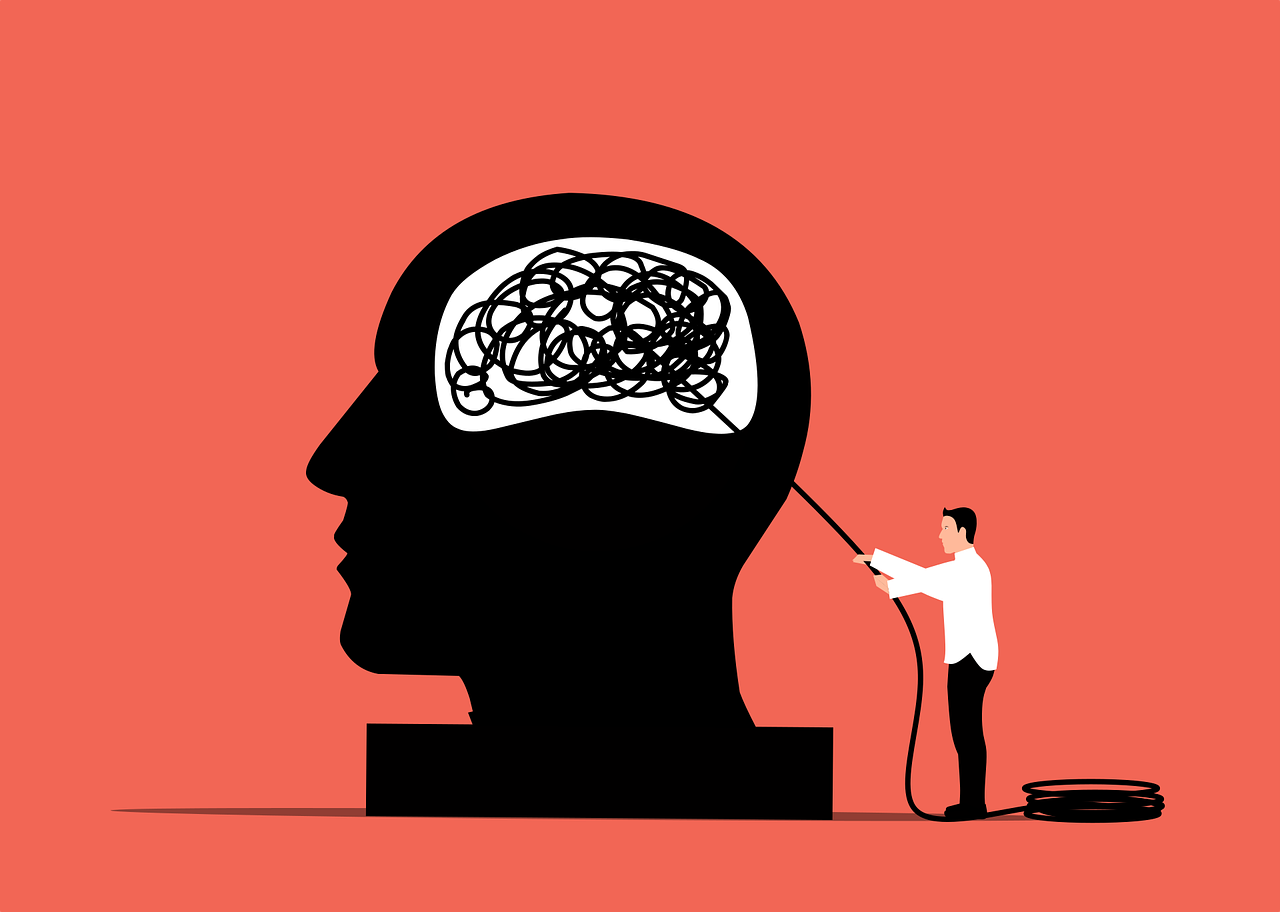
Recently, mental health has been in the spotlight, and for good reason! People are struggling more than ever in this era of uncertainty and apprehension. In fact, the CDC found in a survey that two in five adults have symptoms of depression or anxiety. That’s staggering! And, unfortunately, there isn’t much help for those dealing with mental health issues, partially due to the enduring stigma around mental health.
But here’s the truth of the matter: mental health is health, and it does matter. Research shows that there is a strong link between physical and mental health, and poor mental health has been connected to ailments such as cardiovascular issues, obesity, or even cancer.
Even if you’re not experiencing depression or anxiety, you might not quite be thriving. If you’re feeling drained, aimless, or less-than-joyful, you could be experiencing what researcher and science author Adam Grant calls languishing.
According to Grant, “Languishing is a sense of stagnation and emptiness. It feels as if you’re muddling through your days, looking at your life through a foggy windshield.” He goes on to say, “[Languishing] is the void between depression and flourishing — the absence of well-being.”
I suspect many of us are feeling this state of “languishing” more than ever. If you’re working from home, you might be feeling the monotony of staying in the same space, day after day, and interacting with the same people. You might feel like you’re stuck in “survival mode” and your creative spark isn’t what it used to be.
How can you stave off languishment and rediscover your joy? While I don’t have a magic bullet, I do have a few suggestions:
Step Away
A change of scenery can do wonders for your wellbeing. Stepping away from your desk or your house can give you a fresh perspective and a little distance from any problems you might be facing. Take a walk outside, move your laptop to a coffee shop or library, go out for lunch, practice yoga or hop on the treadmill—whatever appeals most to you! Stepping away, counting, and focusing on your breathing can also create a sense of calm and help put things in perspective.
Focus on One Task
If you’re feeling spread thin or anxious, try focusing on only one task at a time. Don’t give in to the pressure to multitask! Close your email, put your phone on airplane mode, and commit to working on just one thing. This focus time can ease your nerves and give you a sense of accomplishment.
Even if your focus time only lasts half an hour or an hour, that can be enough time to make good progress. Try the “one task at a time” technique whenever you’re feeling scattered or exhausted.
Try for Small Wins
If you are floundering or feeling worn out, try to accomplish one “small win.” This could be any minor, easily accomplished task. For example, test all your pens and toss the ones that no longer work. Or, send one important email you’ve been putting off. Or, clean up your computer desktop or downloads folder. These mini tasks can give you the forward momentum you need to tackle larger projects.
Respect Your “Temple”
Your body is a temple. It’s true. If we don’t treat our physical selves well, our mental and emotional sides also suffer. Take time every day to treat yourself well. Instead of opting for a quick Pop-tart or donut for breakfast, make yourself some eggs with spinach or a bowl of oatmeal with berries and chia seeds. Other ways to “respect your temple” include exercising regularly, de-stressing (taking a hot bath, enjoying a cup of tea, reading a book, getting a professional massage), and setting aside some quiet time for reflection or meditation.
Practicing self-care is essential for maintaining your energy and spark for life. If you don’t take the time to be kind to yourself, how will you have the capacity to care for others or perform at your best?
Talk to Someone
Do not underestimate the power of human connection. If you’re feeling stressed, sullen, or aimless, don’t be afraid to reach out to a close friend or family member for help. Sometimes, simply talking over your issues (or venting!) is exactly what you need to work things out or put things in perspective. If you’ve been feeling truly awful lately, it’s a good idea to schedule a couple sessions with a therapist or psychiatrist. Your mental health is worth it.
MARGARET SMITH IS A CAREER COACH, AUTHOR, INSIGHTS® DISCOVERY (AND DEEPER DISCOVERY) LICENSED PRACTITIONER, AND FOUNDER OF UXL. SHE HOSTS WORKSHOPS FOR PEOPLE WHO NEED CAREER OR PERSONAL GUIDANCE.
CHECK OUT MARGARET’S ONLINE LEADERSHIP COURSE.
Tags: Adam Grant languishing, combat fatigue and stop languishing, Margaret Smith licensed Insights practitioner, Margaret Smith life coach, re-energize your brain, Take care of mental fatigue, ways to soothe a tired mind
- Leave a comment
- Posted under Advice from a Life Coach, Thrive at Work
October 13, 2021 Insights Discovery: Embracing Your Many Colors

If you’ve been following my blog or are familiar with my business, you’ll know that I am a licensed practitioner of Insights Discovery. Insights is a science-based program that is meant to develop self-awareness and improve interpersonal relationships and communication.
Unlike many other assessment programs, Insights uses simple, approachable language to discuss prominent traits in individuals. The Insights color wheel is divided into four colors (red, yellow, green, and blue), each other describing the characteristics of a specific personality type. For example, those who lead with red energy tend to prefer direct communication and rapid action. Those who lead with blue energy tend to be more analytical and like to mull over all options before proceeding.

If you’re not familiar with Insights, you might be thinking, “Wait a minute! That seems like an oversimplification of someone’s personality. Can we all really be reduced to four different personality types?!”
You’re absolutely right.
It’s impossible to fit all people into four neat boxes. That’s why Insights Discovery emphasizes the fact that people’s personalities are multi-colored, and most of us can tap into all the colors on the Insights color wheel. Those who are mostly “red” have the ability to tamp down their natural impulsiveness and embrace their analytical “blue side.” Those who are mostly “blue” can tap into their “inner red” and make snap decisions in a pinch.
Not only that, we might fluctuate from day to day. Those with “sunny yellow” personalities might have days when they’re feeling less social and more introverted. It’s normal and natural to have a dynamic personality that changes from time to time.
That’s why Insights uses the term “leads with” to describe someone’s tendencies. Someone who “leads with” yellow energy is often extroverted, social, and enjoys working with teams, but they may also have a strong blue side that compels them to be analytical as well.
Humans are dynamic. We can adapt to certain groups and settings. That doesn’t mean we’re disingenuous; it simply means that specific situations require us to behave in certain ways. Understanding the Insights color wheel and our ability to embrace other colors is empowering. We’re not stuck in a personality rut—we can grow, adapt, and change when we need to. Not only that, we can actively work on developing other colors of our personality if we feel one or more are lacking. For instance, someone who leads with red energy can attempt to build their empathy and patience by tapping into their inner green energy.
Which colors are prominent in your personality? Which traits would you like to develop? The Insights Discovery color wheel can help! Get in touch if you’d like to learn more.
MARGARET SMITH IS A CAREER COACH, AUTHOR, INSIGHTS® DISCOVERY (AND DEEPER DISCOVERY) LICENSED PRACTITIONER, AND FOUNDER OF UXL. SHE HOSTS WORKSHOPS FOR PEOPLE WHO NEED CAREER OR PERSONAL GUIDANCE.
CHECK OUT MARGARET’S ONLINE LEADERSHIP COURSE.
Tags: Insights Discovery dynamic personality, Insights Discovery lead with color, Insights Discovery multiple colors, insights discovery transformation, Margaret Smith licensed Insights practitioner, Margaret Smith LP of Insights
- Leave a comment
- Posted under Insights Discovery


 UXL Blog