Tag Archives: Life Coaching
September 12, 2012 A Post On Procrastination (If You Get Around To Reading It)
Most of us can identify with the term “procrastinator.” When a deadline looms on the horizon, when unpaid bills begin to pile up on the desk, when the task at the top of the priority list nibbles at the back of our brains, a very common inclination is to just put it off. “Tomorrow, I’ll get going on the house project,” we tell ourselves. “Next week I’ll tackle that research for the upcoming presentation.” From experience, we know that procrastination leads to feelings of anxiety, guilt and low self-esteem. So why do we keep putting ourselves through this?
John Perry, Professor of philosophy at Stanford University, tackles the problem of procrastination in his book, The Art of Procrastination. His big idea is that we should turn procrastination into a positive habit with what he calls structured procrastination.
All procrastinators put off things they have to do. Structured procrastination is the art of making this negative trait work for you. (2012)
Perry continues, stating that procrastinating “does not mean doing absolutely nothing. Procrastinators seldom do absolutely nothing; they do marginally useful things, such as gardening or sharpening pencils or making a diagram of how they will reorganize their files when they get around to it.” Becoming aware of this minimizes the voice in our head that tells us we are lazy or unproductive. Instead of feeling depressed over procrastinating on one task, we can point to a whole heap of accomplished tasks that demonstrate how useful and effective we really are. These may not be the things we were “supposed” to have been doing, but any accomplished goal warrants feeling good about.
Yet how should the procrastinator deal with the big, scary, looming task itself? Perry suspects that procrastination may in fact be the result of perfectionism: “Many procrastinators do not realize that they are perfectionists, for the simple reason that we have never done anything perfectly or even nearly so.” Perfectionism “is a matter of fantasy, not reality.”
Often the procrastinator feels paralyzed by the unrealistically high standards they set for themselves. The project feels too big; it seems unclear where to even begin. And as the days toward the deadline fly by, the procrastinator busies themselves with other tasks as a way to justify not working on what they are supposed to be working on.
To combat this, we should do a bit of a reality check: “You have to get into the habit of forcing yourself to analyze, at the time you accept a task, the costs and benefits of doing a less-than-perfect job.” In other words, we need to implement a realistic perspective of our abilities and time constraints. To do this, we must first realize that the fantasy of perfection is just that: a fantasy. More often than not, “a less-than-perfect job will do just fine,” says Perry. This is not to advocate mediocre work. Instead, this outlook points out the simple fact that nobody on the face of the planet has ever done anything perfectly. With this in mind, it becomes easier for the procrastinator (who very well may also be the perfectionist) to free themselves from unrealistic fantasies, and sit down and get to work.
All in all, procrastination can be a negative force in your life if you make it one. Or, it can be a helpful tool. If you’re feeling rotten about having put off something important, make a list of all the things you’ve accomplished during this time. You may surprise yourself with how big the list can get. Allow yourself to feel good about these accomplishments! Were you doing all those things to avoid something else? Perhaps, but that doesn’t take away from the good work you’ve done in other areas of your life. Now you have positive momentum, so use it to start the thing you’ve been avoiding. Free yourself from the fantasy of perfection, and be confident that by stressing over the work, you’re demonstrating that you care about the outcome. Good work will follow.

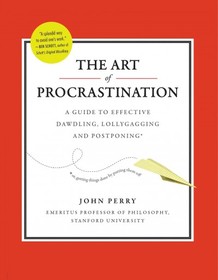
Perry, John. Date. The Art of Procrastination. New York: Workman Publishing Company, Inc.
Tags: How to Boost Self-Esteem, How to Change Your Life, Life Coaching
- Leave a comment
- Posted under Advice from a Life Coach, Changing Your Life
June 13, 2012 Are You Weighed Down by your Stuff?
By Margaret Smith,
SPEAKER | CAREER COACH | CERTIFIED INSIGHTS DISCOVERY PRACTITIONER
I’d like to start this blog post with a question:
What stuff do you have weighing you down?
What do you mean by “stuff”, you ask?I was confronted with the idea of stuff overload in an article published recently in Parade Magazine. This article, titled “Is Your Stuff Weighing You Down?”, tackled the issue of actual physical clutter—the lamps, mugs, ointments, clothes, supplies, and other objects that fill our closets and our attics.
The concept presented in the magazine slowly grew into a larger issue in my mind. It all started the other day with a search for a guitar amp. Now before you get confused, let me assure you that the guitar amp was not for me, it belongs to my son who had returned home in search of a few items.
Because my son is in his mid-twenties, he’s been out of the house for some time now. This adds a special challenge to locating his stuff. While he may have remembered what closet he left his amp in, the closet itself had been overrun with miscellaneous piles of my “work stuff”. He opened the closet door and optimistically expected to see his amp. Instead, he faced perilous stacks of my documents, envelopes, gadgets, and more.
He returned downstairs to find me in the kitchen. “Mom, what is all that stuff?” he asked.
My honest reaction was mutual confusion. “You’re right,” I said, “what is all that stuff?!” I then trudged upstairs to tackle my clutter. As I dealt with the tangible stuff, I started to think about the less tangible stuff that may not fill my closet, but sure fills my mind and weights me down.
So now I bring this tough but amazing question to you. What are the sources of guilt, obligation, and responsibility that you feel weighing you down? Are some of these items actually the “stuff” or responsibility of other people that you’ve taken on yourself?
You may find that you’re bogged down in stuff because you’re saying “yes” too often, and that these items distract you from your real goals. (Now would also be a good time to ask yourself, What are my real goals?)
Here’s a great way to measure the way you use your time:
1. List the 3 things that you value most (spending time with family, learning, etc..)
2. Make a list of the things you’ve devoted time to in the last week
3. Give each area you devote time to a percent out of 100 for the week (perhaps your work ends up constituting 70% of your time, volunteering 5%, etc)
If your use of time conflicts with the things you value most, consider rethinking your life balance.
If your issue is that you have trouble gracefully declining the requests of others, take a moment to visit my handy list of creative ways to say “no”. I promise you won’t regret it!
image: scanned from Parade Magazine
Tags: Career Coach Advice, How to Change Your Life, Life Coaching, Stuff
- Leave a comment
- Posted under Advice from a Life Coach, Changing Your Life
May 23, 2012 Musings from a Week with My Mother
By Margaret Smith, UXL:
SPEAKER | CAREER COACH | CERTIFIED INSIGHTS DISCOVERY PRACTITIONER
I had the opportunity to spend this past week with my mother. She’s 82 and still has the ability to teach me something if I just watch and listen. Below are just a few of the things I learned.
1) Slow down: She doesn’t walk as fast as I do anymore. Rather than forcing her to try to keep up, I walked beside her. It’s amazing what you see and how much less stressed you look when you just go a little slower. We still got everything done we needed to and got where we had to be on time.
2) Read to children: My mother is a retired second grade teacher, the mother of 5, and grandmother of 14. Therefore, she has a lot of experience with this. Every afternoon two of my neighbors girls, ages 4 and 7 came over for reading time. They sat on my front porch and just read and talked: Curious George, The Cat in the Hat Comes Back, Wing a Ding, The Song and Dance Man (one of my favorites), and Old Henry. The pile grew as the week went by and so did her anticipation of the door bell ringing. I swear she got 10 years younger every time they showed up!
3) Exercise every day: My mother wasn’t a jazzercise freak or a health club junkie as I was growing upl. She chased 5 kids around, gardened, raised chickens, and drove the tractor for my father as he baled hay. They were city kids who moved out to the farm and dove headfirst. My dad was a chemical engineer for Du Pont who took his tie off in the car on his way home and was on the tractor in 15 minutes. My mom walked every day while she was here, even if it was just around the block, and did some sit ups and few good stretches. No one can call her sedentary.
4) Only eat until you’re full: I’ll never forget how she would load our plates with food and then make sure we cleaned them, no leaving anything—even those peas I hate—on the plate! Her secret now is slightly different: Only put a small portion of food on your plate, and don’t go back for seconds you probably don’t really need. She’s now in better shape than she was at 52.
5) Ask for help and appreciate it: It seems easy when you are 82. Everyone will hold a door, pick up a bag, take your suitcase off the carousel—my mother’s a great delegator. Her philosophy is similar to the quote I use with my boys, “You don’t get what you don’t ask for.” Well, maybe I should listen to my own advice. My mother got more help from strangers simply by asking and showing appreciation, smiling and joking with people, than most of us do from our own families.
6) Be “the face” for your children and grandchildren: She would always remind us, “if you don’t know what to do or if what you are about to do is right or wrong, just envision my face coming in front of you, you’ll know what to do.” My boys remember this advice, and have told me numerous times it saved them from making stupid decisions. We see parents every day doing dumb things in front of their children, using language that I’d be embarrassed for my mother to hear, so why are we surprised when kids act the same way? I’m glad my boys have my mother’s face to keep them focused on being and doing good.
7) Give away what you don’t use: Look in your closet and cupboards. Why do we have all that stuff?! Is it holding you back or holding you down? Could you have spent that money on a vacation or helping someone that really needed it? Mom’s reduced her ‘stuff’ dramatically over the past 5 years, giving most of what she doesn’t use to a local mission. Having her with me this week made me want to clean out a few closets, which I plan on doing tomorrow!
The lessons I learn from my mother span on and on, but the 7 listed above are a great start. These lessons help me to realize the impact she made on all of us, and not just the people that live in my house. Her smile and willingness to get involved and reach out was an inspiration. I can’t wait until I get another week with her.
I hope that this story helps you to make the most of the people in your life, and lessons they have to offer.
Margaret
Tags: How to Change Your Life, Improving Relationships, Life Coaching


 UXL Blog