Tag Archives: Healthy Workplace
February 6, 2014 The Simple Power of the Smile
I just watched this great TED talk and feel it’s definitely worth sharing.
Smiling is such a no-brainer that we often forget to appreciate its immense power.
Speaker Ron Gutman points out that smiling is a sign of longevity. Those who smile wide and often live longer.
But beyond being a sign of good health, smiling has the power to encourage, to unite, and to inspire. Smiling is contagious. A genuine smile transforms both the smiler and the people around him/her.
Don’t believe me? Take a day or two to really pay attention to your facial expressions. I promise that if you tend to frown, and make a point to smile instead, you’ll feel better. You’ll notice that those around you will respond more enthusiastically as well.
Try it out!
Further reading: An article in Psychology Today describing the science behind smiling.
Tags: Career Coach Advice, Healthy Workplace, How to Boost Self-Esteem, Job Hunt Advice, Little things that go a long way, The power of smiling
- Leave a comment
- Posted under Uncategorized
January 8, 2014 Are You Here? 3 Questions That Help Keep You In The Present
Reflecting on my corporate experiences, a great deal of time was spent in meetings. These meetings ranged from one-on-ones to teams of ten or twenty to business reviews that involved hundreds. Each meeting was an opportunity—but I did not always see them that way. Instead, I viewed them as an interruption preventing me from getting to the real work.
I wasn’t engaged in the moment, fully devoted to what was happening right then and there. Because I let my thoughts go elsewhere, I lost the chance to contribute my best self to the coworkers in those meetings.
It’s easy to get lost in the past or be worried about the future. It’s easy to go off into daydreams. But when you get into the habit of living in the past or future, you miss out on the now. And when you think about it, we’re always in the present. Right now is always, well, happening right now. Which means that when we aren’t in the habit of being present, we limit our ability to live to our fullest.
I’ve started using a technique to help me stay present. I make a point to ask three questions:
1. One that offers support and encouragement
2. One that asks for clarification of a particular subject
3. One that demonstrates the vital inclusionary behavior of successful leaders
You probably noticed that these questions aren’t cookie cutter, copy and paste solutions. That’s the point. In order to ask these questions, you’ll need to be paying attention. You’ll need to know your coworkers’ strengths and weaknesses. Asking these questions shows your team that you’re there, engaged, and ready to dive in.
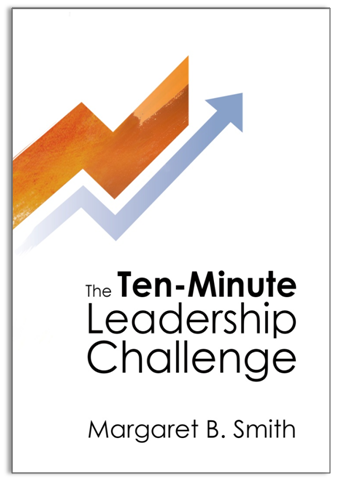 For more on staying present and other vital leadership principles, get your copy of my new book, The 10 Minute Leadership Challenge today.
Tags: Effective Communication, Healthy Workplace, Improving Leadership, Interviewing Tips, Margaret Smith, UXL
- 4 comments
- Posted under Advice from a Life Coach


 UXL Blog