Category Archives: Teamwork
September 24, 2025 Building Can Be Better Than Creating

As a leader, it can be easy to get swept up in the excitement of change. We might attend a conference or discover a new program and want to implement what we’ve learned in the workplace. But large changes might seem more daunting than exciting to your team. Where you might see innovation and opportunity, they might see more work and tension. Or they may wonder what was so wrong with the old system. Rather than overhauling the system, there is a better approach to change.
Building on Strengths
Even in a flawed system, there are usually elements that work. Maybe a software program isn’t as efficient as it could be, but it’s easy to use. Or maybe your team is great at brainstorming new ideas, even if they never get implemented. Or perhaps individuals have many skills and strengths, but they do not tend to collaborate well with others. It’s a good idea to look for strengths before considering a complete system overhaul. Even if everything doesn’t work perfectly, you’ll likely find some elements that do work just fine.
Once you’ve identified the positive skills, habits, strengths, or attributes of your team, you can begin building on them. If the team is excellent at coming up with creative ideas, lean into that. Convey that you appreciate their talents and get them excited about stretching those skills even further while developing additional skills, such as time management or attention to detail. Set aside time for your team to really shine while also asking them to try something new.
When people are in their element, they are more likely to be open to constructive feedback and additional asks. Additionally, your team will probably be more willing to make changes when they play an active role in deciding how to approach the change.
Thinking about the creative team from the above example, you may challenge your people to come up with five potential solutions to improve meeting deadlines. Or you could ask them to brainstorm ideas for more effectively collaborating with the data analytics department.
Another part of building on knowledge and abilities involves language. Instead of focusing on and talking about deficiencies, start talking about positive traits that can be made even better. In the improv comedy world, the phrase “yes and…” is commonly used. Essentially, when someone is presented with a new, improvised situation, they can keep the scene going by accepting what is happening and building on it. This can create a back and forth that moves the action forward in new and often unexpected ways.
“I see you have a parrot.”
“Yes, and his name is Bill.”
“Yes, and I noticed he has a special diet of spaghetti and meatballs.”
“Yes, and he sometimes hosts pasta nights for his friends.”
This is a silly example, but the main idea is this: accept your team’s positive attributes and talk about how to build on them.
Yes, the team is great at customer service, AND they can use that skill to reach new markets.
Yes, the team is comprised of excellent individual performers, AND they can brainstorm ways to work better as a team.
The point is to leverage the skills and knowledge your team already has to make productive changes. Start noticing your people’s skills, tendencies, and attributes. Think about goals and areas of improvement. Then, work with them to co-create solutions to take the team to the next level. This is about building on what already exists, not starting from scratch.
MARGARET SMITH IS A CAREER COACH, AUTHOR, INSIGHTS® DISCOVERY (AND DEEPER DISCOVERY) LICENSED PRACTITIONER, AND FOUNDER OF UXL. SHE HOSTS WORKSHOPS FOR PEOPLE WHO NEED CAREER OR PERSONAL GUIDANCE.
CHECK OUT MARGARET’S ONLINE LEADERSHIP COURSE.
Tags: build on team's skills, building better than creating, developing team strengths, leadership and skill development, margaret smith leadership, Margaret Smith LP of Insights
- Leave a comment
- Posted under Goals, Leadership, Teamwork
April 23, 2025 Help Others to Adapt (by Leveraging Your Strengths)

In my last post, I discussed the variety of ways in which people process and cope with change. While change might excite and energize some, others may feel discouraged or frightened by it. This, of course, can depend on what type of change we’re dealing with, and the circumstances around it. It also depends on a person’s personality and ways of processing change.
These concepts can all be tied to Insights® Discovery, a science-based program which helps people become better acquainted with themselves, their personal tendencies, how they react or adapt to certain situations, and more. (See my last post for more information on the program.) Suffice it to say, we all have different methods for dealing with change, and some of that is driven by our personal attributes and inclinations.
No one is flawless when it comes to fielding change. We all have areas of improvement, but we also have areas of strength. To help others cope with change, I’d like to challenge you to think about your personal strengths and how they can be an asset. Let’s discuss some of the strengths you might have:
You’re Research- or Data-Oriented
If you’re the type who likes to have the full, evidence-based picture before proceeding, you can play into this strength to help facilitate change. During times of uncertainty, research and data can assist us by painting a better picture of a situation (whether for better or worse!). And that, in turn, can help people understand how to move forward.
When leaning into this strength, keep in mind that not everyone sees the world as you do, so it’s a good idea to present the data in a way that is easily understood and digestible.
Note: these traits are associated with “blue energy” on the Insights® Discovery color wheel.
You’re a Go-Getter
For some, change is exciting and energizing. It feels like an opportunity to create a new, better reality. Even if a situation may seem negative on the surface, someone with a go-getter personality will want to move forward, experiment, and try out the new normal. While it is often a good idea for gregarious types to slow down, consider repercussions, and examine the data, it is also a good thing to have this type of movement-focused energy.
To help others, it’s prudent to channel some of this energy into concrete actions. Pinpoint a few reasons to get excited about the change and/or discuss a few ways of implementing the change as effortlessly as possible. Alternatively, if a certain change seems wholly terrible, a go-getter will develop strategies to refute or rework the change into something better. In short, let your enthusiasm be contagious and propel positive change.
Note: these traits are associated with “red energy” on the Insights® Discovery color wheel.
You’re Empathetic and Big-Hearted
Some people are defined by being caring and empathetic, often placing others’ wellbeing before their own. These compassionate souls can help either facilitate a change or soften its blow by considering how certain people (or groups of people) will react to or be affected by the change. Since the world (and workplace) is comprised of all types of people with different background and beliefs, it is tremendously valuable to be able to think beyond yourself and put yourself in others’ shoes.
This way of thinking can lead to adapting plans that work for a wide array of people, OR personalizing strategies to cater to certain groups. Perhaps certain aspects of a certain change will work for specific people, while other aspects should be rejected or reconsidered. Whatever the case, those with empathy are well-equipped to lead people-centered actions.
Note: these traits are associated with “green energy” on the Insights® Discovery color wheel.
You’re Creative
Some moments require creative minds and out-of-the-box thinkers to take the lead. These personality types can examine a difficult situation and start thinking of ways to rework it, move around it, or reject it. Creative solutions can help people dealing with a major change OR they can help to reinvent/rethink the change so it works better for more people.
If we pair creative types with those who prefer to lean on evidence and research, we can create a powerful team that, in theory, balances data with innovative solutions.
Note: these traits are associated with “yellow energy” on the Insights® Discovery color wheel.
No matter your personality, you have the capability to help others deal with change. Whether you’re opposed to or supportive of the change, you have the power to navigate it, using your unique strengths and personality traits. Start thinking about your personal attributes as your superpowers!
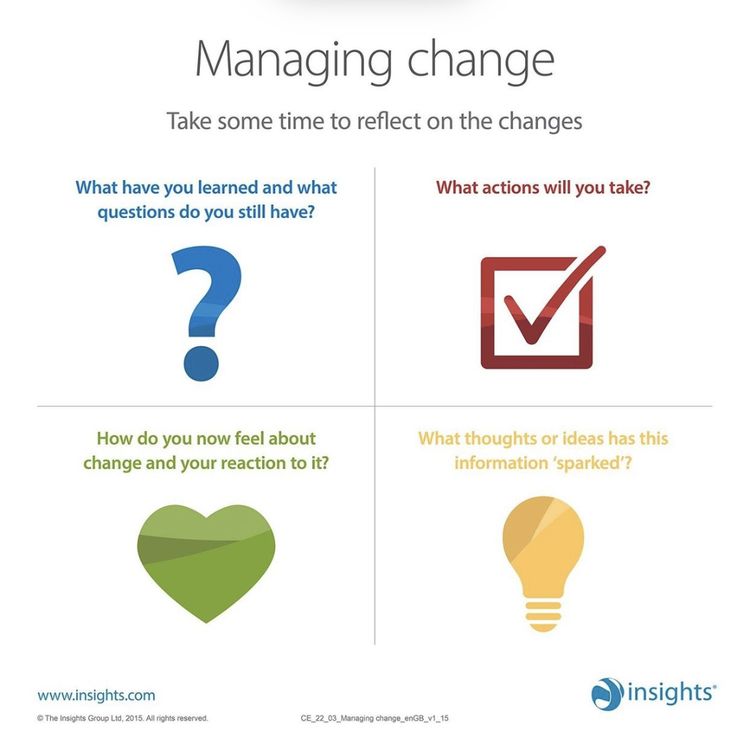
BONUS: Insights® Discovery provides a chart for the four major personality types (color energies) to manage change. I encourage you to take a look:
MARGARET SMITH IS A CAREER COACH, AUTHOR, INSIGHTS® DISCOVERY (AND DEEPER DISCOVERY) LICENSED PRACTITIONER, AND FOUNDER OF UXL. SHE HOSTS WORKSHOPS FOR PEOPLE WHO NEED CAREER OR PERSONAL GUIDANCE.
CHECK OUT MARGARET’S ONLINE LEADERSHIP COURSE.
Tags: Assist with Change Tap into Strengths, help others adapt, Helping Others with Change, Insights Discovery strengths, Leverage Your Strengths, Margaret Smith licensed Insights practitioner, Margaret Smith Minneapolis career coach, Personality Traits and Change
- Leave a comment
- Posted under Better Business, Insights Discovery, Teamwork
June 19, 2024 5 Ways to Banish Laziness and Energize Your Team

Let me establish right away that I am fully supportive of a healthy balance between life and work. If you wear yourself too thin, you’ll eventually become exhausted, resentful, and unable to operate at full capacity. This doesn’t serve you or your workplace. However, there is a big difference between striving for balance and refusing to work or rise to the challenge.
Encouraging your team to embrace productivity and creativity doesn’t mean you expect them to work nonstop. Instead, it’s about fostering a culture where everyone feels motivated to contribute their best. As a leader, you can help to motivate and empower your team, while also banishing laziness and procrastination.
Here are 5 strategies to energize your team:
Set Clear Expectations
If a team does not know where they are heading or unsure of their responsibilities, they might start to feel directionless and frustrated. This can lead to uncertainty and a decrease in productivity. By setting clear expectations for your team, you provide them with a roadmap for success. Make sure everyone understands their roles and responsibilities, as well as the team’s goals and objectives. Clear communication and transparency are key to keeping everyone on track and motivated. When team members know what is expected of them, they are more likely to stay focused and engaged in their work.
Provide Support
As a leader, it is crucial to offer your team members the support, encouragement, and resources they need. This might mean guiding them through challenges, offering training opportunities, or simply being there to listen when they need advice. It could also mean connecting them with mentoring opportunities. A supported team is often a productive team.
Create a Culture of Accountability
If too many deadlines slide, or too many projects are allowed to be subpar, this can send a signal that mediocrity is acceptable. On the other hand, when team members are held accountable for their work and deadlines, it fosters a culture of responsibility and excellence. Encouraging a sense of ownership for individual and team outcomes can drive motivation and productivity. By setting clear standards and expectations, and regularly reviewing progress, you empower your team to take ownership of their work and strive for continuous improvement.
Check In
Regularly checking in with your team members will ensure they have what they need to excel in their roles and feel supported in their work environment. It also allows you a chance to find out what’s working, what’s not, and what they might need to overcome any obstacles. By checking in regularly, you demonstrate your commitment to their success and well-being. This practice also fosters open communication and trust within the team. Furthermore, it allows for adjustments to be made promptly if necessary, ensuring that the team stays on track towards achieving its goals.
Genuinely Care
Seeing the human side of people is an essential way to foster a positive work environment. Show genuine care for your team members by acknowledging their efforts, celebrating their successes, and supporting them during challenging times. Building strong relationships based on care and empathy can significantly boost morale and motivation within the team. Be mindful of their well-being and always be ready to offer a listening ear or lend a helping hand. Your team will appreciate your genuine concern and reciprocate it with increased dedication and loyalty.
As a leader, it’s essential to set clear expectations, provide support, and recognize efforts. By banishing laziness and energizing your team, you create a positive environment that fuels growth and success. And remember to lead by example by demonstrating a strong work ethic to inspire your team to perform at their best.
MARGARET SMITH IS A CAREER COACH, AUTHOR, INSIGHTS® DISCOVERY (AND DEEPER DISCOVERY) LICENSED PRACTITIONER, AND FOUNDER OF UXL. SHE HOSTS WORKSHOPS FOR PEOPLE WHO NEED CAREER OR PERSONAL GUIDANCE.
CHECK OUT MARGARET’S ONLINE LEADERSHIP COURSE.
Tags: banish laziness from work, empower and energize work team, energize work team, margaret smith career coach, margaret smith leadership, re-energize lazy work team
- Leave a comment
- Posted under Advice from a Life Coach, Better Business, Teamwork


 UXL Blog