Category Archives: Leadership
May 1, 2024 Your Leadership Might be Missing…A Color?

A version of this post was first published in September, 2018.
Every leader has their strengths. You might be an excellent idea-generator or public speaker. Maybe you’re great with details. Or, maybe your team considers you a trusted confidante. Whatever the case, it’s great to celebrate and emphasize your strengths…but it’s also a good idea to identify your areas of opportunity.
No leader is perfect. There is always room for growth. But how can you get started with self-improvement? Isn’t that a bit daunting?
It doesn’t have to be.
By assigning certain personality traits certain colors, it’s easy to identify the areas where you are lacking. That is precisely what the Insights® Discovery program does. According to the Insights® color model, each individual has the capability to embrace and utilize all four color energies, but we typically only emphasize one or two. In essence, the color system breaks down like this:

So what happens when, as a leader, you don’t tap into each color energy?
You may find that you’re not as well-rounded as you could be. For instance, if you lead with a lot of yellow energy, you may jump into projects feet first, without thinking through all the details. While this is great for motivation and could have positive effects on your team initially, the long-term effects may be disastrous if certain key factors were not taken into consideration (Oh…we needed to get permission from corporate before contacting that client…).
On the flip side, if you lead with a lot of blue energy, you may nit-pick the details to death and have trouble starting a project (let alone drumming up enthusiasm for it).
To examine this idea further, take a look at the following chart. Which areas in YOUR leadership need a boost? How could “Fiery Red” be useful at times? How could green? Yellow? Blue?
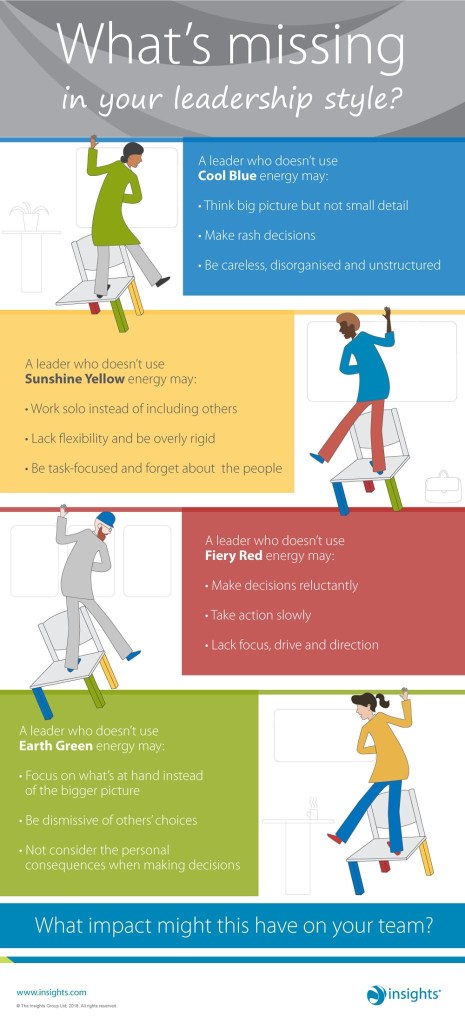
Coming from someone who typically leads with yellow energy, I know the importance of tapping into my “blue side.” If you usually embrace “Earth Green,” it may be important to tap into some “Red” qualities, such as taking decisive actions. How will you call upon your under-utilized colors today?
MARGARET SMITH IS A CAREER COACH, AUTHOR, INSIGHTS® DISCOVERY (AND DEEPER DISCOVERY) LICENSED PRACTITIONER, AND FOUNDER OF UXL. SHE HOSTS WORKSHOPS FOR PEOPLE WHO NEED CAREER OR PERSONAL GUIDANCE.
CHECK OUT MARGARET’S ONLINE LEADERSHIP COURSE.
Tags: Improving Leadership, Insights and Leadership, insights discovery leadership, leadership missing color, margaret smith career coach, margaret smith leadership
- Leave a comment
- Posted under Insights Discovery, Leadership
April 10, 2024 Developing Your Patience for Better Business

We are a society of instant gratification and quick rewards. We order a package from Amazon, it arrives within a day or two. We want to watch a show, we switch to our streaming platform of choice and tune in. We want a meal, we order online and receive it at our doorstep. With so many ways to instantly satisfy our needs and wants, many of us have forgotten how to practice patience.
Patience is a crucial attribute in both our personal and business lives. It can help us weather storms, create robust strategies, and maintain a sense of calm. When we’re patient, we also tend to be gentler and more civil to those around us, from the overworked barista to the co-worker who is juggling multiple responsibilities.
In my experience, patience is absolutely an asset when it comes to business. A patient leader…
…takes the time to get to know their team members.
…invests in skill-building training.
…collects data and gives projects a chance before changing course.
…strategizes and considers options before jumping in.
…recognizes that development and progress may take time (and celebrates small victories along the way).
Believe it or not, patience is a skill you can develop. Some people may be innately less patient than others—looking at you “red energy” and “yellow energy” folks (see my post on Insights® Discovery if you don’t get that reference)! However, all people can improve their patience. I suggest building patience with the following four steps:
Develop Awareness
The first step to becoming more patient is to recognize when you’re being inpatient or impulsive. Start noticing when you’re being short with others, or you’re tempted to make a decision or take an action before you have all the information. Once you start becoming aware of your own impatience, you can begin to correct this tendency.
Start Practicing
Start practicing patience in small, daily interactions. Pause before reacting to minor inconveniences, give people more time to express themselves fully, and allow projects to unfold at their natural pace. Over time, these small adjustments will become habits, and you’ll find yourself naturally more patient in various situations.
Challenge Yourself to Go One Step Further
After practicing daily patience, it’s a good idea to challenge yourself to apply it to more significant situations. When faced with a tough decision or a challenging project, consciously choose to approach it with patience. Allow the process to unfold without rushing to conclusions or taking shortcuts. When you’re tempted to give into an impulse say to yourself, “I can go just one step further.” That might mean waiting another day, asking one more person for advice, or doing just one more hour of research.
Recognize This Takes Time
As you’re developing your patience, you’ll have to (ironically) be patient with your progress! Developing a new skill takes time and consistent effort. Celebrate the small victories along the way, acknowledging that progress won’t happen overnight. But with concerted effort, you will eventually build this skill.
Patience is a virtue that can enhance your leadership skills, decision-making abilities, and overall well-being. Remember, by developing your patience, you’re not just benefiting yourself but also fostering a more positive and productive environment for those around you. Embrace the journey of building patience and enjoy the transformative impact it can have on your personal and professional life.
MARGARET SMITH IS A CAREER COACH, AUTHOR, INSIGHTS® DISCOVERY (AND DEEPER DISCOVERY) LICENSED PRACTITIONER, AND FOUNDER OF UXL. SHE HOSTS WORKSHOPS FOR PEOPLE WHO NEED CAREER OR PERSONAL GUIDANCE.
CHECK OUT MARGARET’S ONLINE LEADERSHIP COURSE.
Tags: develop patience, Margaret Smith business coach, margaret smith leadership, patience and leadership, patience as business asset, practicing patience for better business
- Leave a comment
- Posted under Advice from a Life Coach, Better Business, Leadership
March 27, 2024 How to Meaningfully Improve an Employee’s Work Performance

If an employee is not quite rising to your workplace’s standards, that can be a delicate situation. On the one hand, if you critique the person’s work too harshly, they may become discouraged or frustrated, or they may even quit. On the other hand, if you do not underscore the importance of the situation, or if your feedback is not specific enough, that person might continue to operate in the same manner, and little will change.
How do you navigate this tightrope-like situation? How can you provide adequate feedback, guidance, and resources to help improve an employee’s performance? Here are three ways to make a meaningful difference:
Give Excellent Feedback
Unfortunately, it is incredibly easy to flub feedback. The feedback might be too vague, too harsh, or lacking a sense of urgency. When providing feedback to underperforming employees, I suggest keeping three things in mind:
1. Make It Specific
It isn’t enough to tell someone they need to “step it up” or “make strides.” Instead, give specific feedback on what the person is doing right and what they need to improve. It helps to open with the positive (“Sandy, your people skills continue to impress me. Customers say you’re easy to talk to and an excellent communicator”) and then move into the areas of improvement (“However, our numbers show that you have trouble closing the sale. Let’s talk about some of the potential roadblocks you’re facing…”).
2. Set Goals
When working on a specific area to improve, it is helpful to set SMART goals. SMART is an acronym that stands for:
Specific – the goals should be clear and well-defined.
Measurable – the goals should have measurable criteria for success.
Achievable – the goals should be attainable and realistic.
Relevant – the goals should be aligned with the employee’s role and the overall objectives of the organization.
Time-bound – the goals should have a specific time frame for completion.
By setting SMART goals, you provide the employee with a clear roadmap for improvement and a way to track their progress. This approach helps to ensure the employee understands what is expected of them and can work towards achieving those goals.
3. Create a Check-In Plan
It’s helpful to create a plan for regular check-ins with the employee. This allows you to monitor their progress, address any concerns or challenges they may be facing, and provide ongoing support and feedback. The frequency of the check-ins can vary depending on the employee’s needs and the urgency of the situation. It’s important to create a supportive and non-judgmental environment during these check-ins, so the employee feels comfortable discussing their progress and any obstacles they may be encountering.
Facilitate a Mentorship
Mentorship can be a valuable tool for improving an employee’s work performance. Pairing the underperforming employee with a more experienced and successful colleague can provide guidance, support, and valuable insights. The mentor can share their own experiences, offer advice, and help the employee develop the necessary skills and knowledge to excel. This one-on-one relationship allows for personalized guidance and can greatly enhance the employee’s professional growth. A mentorship program can be formal or informal, depending on the needs and preferences of the individuals involved.
Provide Necessary Resources
To support an employee in improving their work performance, it’s essential to provide them with the necessary resources. This could include training programs, workshops, online courses, or access to relevant materials and tools. By equipping the employee with the resources they need, you empower them to acquire new skills and knowledge that can enhance their performance. Additionally, offering ongoing learning opportunities demonstrates your commitment to their professional development and shows you are invested in helping them succeed.
By following a few intentional strategies, you can begin to make meaningful improvement in an employee’s work performance. Remember, communication is key, and it’s hard to know what your employee needs until you take the time to sit down and talk with them about their performance. Frame this an opportunity for growth and development, rather than a punishment. Creating a supportive environment can help foster continuous improvements and aid employees in reaching their full potential.
MARGARET SMITH IS A CAREER COACH, AUTHOR, INSIGHTS® DISCOVERY (AND DEEPER DISCOVERY) LICENSED PRACTITIONER, AND FOUNDER OF UXL. SHE HOSTS WORKSHOPS FOR PEOPLE WHO NEED CAREER OR PERSONAL GUIDANCE.
CHECK OUT MARGARET’S ONLINE LEADERSHIP COURSE.
Tags: benefits of mentoring, better feedback, improve employee work performance, leadership to improve employee performance, margaret smith leadership, Margaret Smith Minneapolis career coach
- Leave a comment
- Posted under Communication, Goals, Leadership


 UXL Blog